


What Makes a Brooklyn Burger Truly Unforgettable?
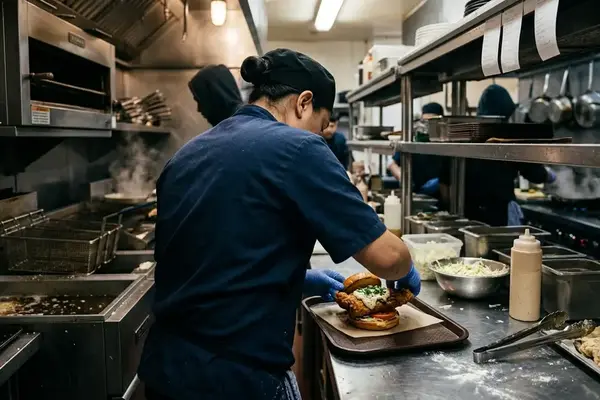
The smell of rendering beef fat hitting a hot plancha tells you everything you need to know before you even take a seat. We are looking for the exact moment a simple beef patty elevates into a Brooklyn culinary landmark. It isn't about the price tag, and it isn't about how well the cheese pull photographs. It comes down to a kitchen repeating a distinctive, flawless combination of beef, salt, and heat.
Brooklyn's dining history runs deep. Peter Luger laid the borough's steakhouse foundation back in 1887. Decades later, DuMont Burger shifted the paradigm in the mid-2000s, turning the Williamsburg burger into a true destination order. Then Emily arrived in Clinton Hill in 2014. That opening normalized the dry-aged, sauce-forward, pretzel-bun format that dominates menus today.
Our ongoing tracking of Williamsburg and broader Brooklyn dining trends over the past two decades provides the baseline for these evaluations. To declare what rules the scene right now, we verified restaurant menus, reservation availability, and service hours during a strict reporting window from October 2025 through January 2026.
How Do We Define a Top-Tier Gourmet Burger?
A great burger holds together through the final bites. We evaluate operational traits right at the table. Patty thickness, requested doneness, and crust formation matter immensely. We watch for bun compression after five minutes. Sauce leakage and cheese melt tell a story of kitchen discipline.
Caveat: this evidence set applies strictly to gourmet sit-down restaurant burgers, not fast-casual chains, frozen patties, delivery-only menus, or limited pop-ups without repeatable service hours.
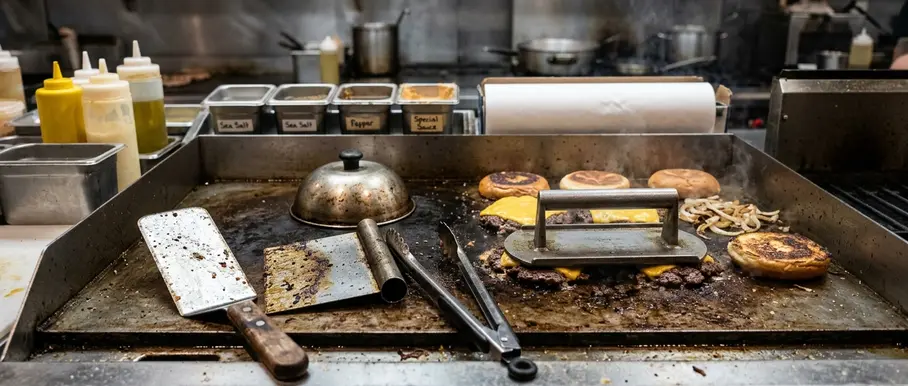
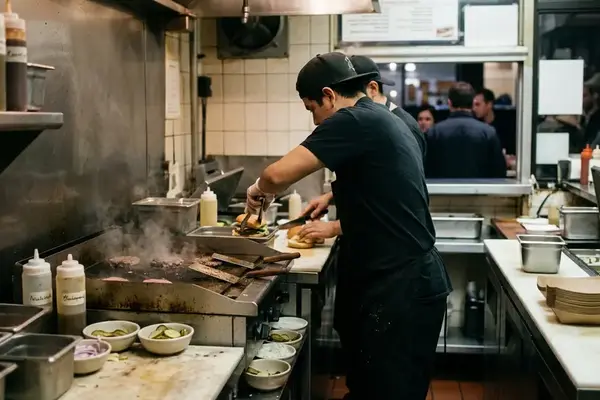
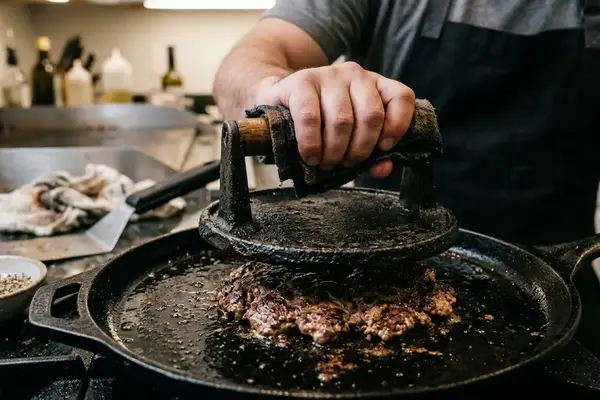
The Maillard reaction is non-negotiable. A dark patty is not enough. The crust must taste browned and savory, achieved through high-contact cooking on cast iron, a plancha, or a broiler.
High-quality ingredients justify the premium price tag. USDA beef grading standards dictate that Prime cuts carry more abundant marbling than Choice or Select. That fat translates directly to flavor depth. Many top restaurant dry-aging programs push their beef for around three to six weeks. The resulting funk and tenderness are worth the investment.
Note: Do not assume a burger is wood-fired just because the restaurant is famous for wood-fired pizza. Confirm the actual cooking surface with the kitchen or look for a visible station setup.
Which Classic Brooklyn Burgers Still Dominate the Scene?
The Dry-Aged Tavern Burger
Red Hook Tavern opened in 2019 and immediately cemented its status. You get a thick, dry-aged cheeseburger draped in American cheese. It delivers steakhouse-adjacent richness in a classic tavern profile. Dinner availability remains highly competitive.
The Steakhouse Icon
Peter Luger Steak House in Williamsburg is a lunch-only affair. The Luger-Burger packs over half a pound of steak trimmings onto a bun—a massive, unadorned testament to beef quality. Cheese and bacon are treated as add-ons, not the core identity. Timing is critical here. The kitchen strictly cuts off burger orders at 3:45 PM.
The Pretzel Bun Pioneer
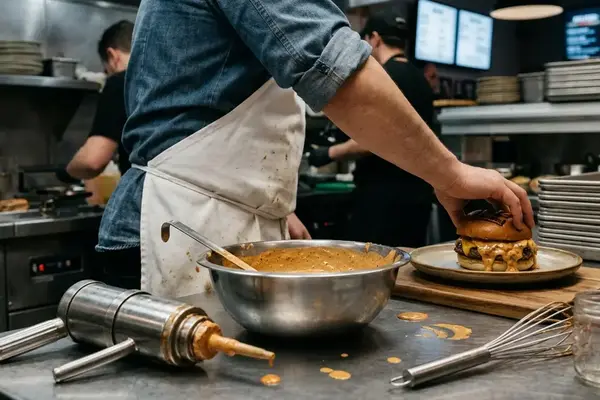
Emily in Clinton Hill remains a heavyweight. The Emmy Burger balances a dry-aged patty with Emmy sauce, caramelized onions, cornichons, and Grafton cheddar. The sturdy, salty chew of the Bavarian pretzel bun holds the massive build together. The Emmy Burger maintains its original dry-aged build — current menu checks confirm as much.
Where Are the Best Modern Burger Innovations Hiding?
The Elevated Smash
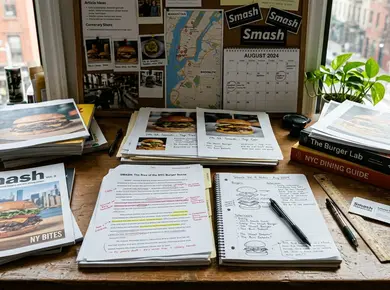
A Greenpoint newcomer takes the thin, crispy-edged smash burger and upgrades the foundation. They use a custom-ground blend of brisket and short rib. The fat renders rapidly on the griddle. This creates a lacey, brittle edge that shatters perfectly against the soft bun.
The Umami Bomb
Modern flavor layering requires restraint. One standout features black garlic mayo, roasted mushrooms, and aged Swiss. All three components must appear together to justify the umami label. The earthy mushrooms cut through the rich mayo perfectly, while the aged Swiss provides a sharp, nutty finish.
The Southern-Inspired Stack
Height introduces structural risk. A towering build incorporating pimento cheese and fried green tomatoes tests a kitchen's engineering. The bun cannot collapse within five minutes. The tomato coating must remain crisp. The cheese spread should never cause patty slippage after the first bite.
Summary: Modern innovators succeed by upgrading the beef blend or engineering structurally sound toppings, rather than just piling on trendy ingredients.
How Should You Plan Your Brooklyn Burger Crawl?
A two-stop weekend tasting creates useful contrast without palate fatigue. Start your Saturday in Williamsburg. Reserve a lunch seat between 12:00 PM and 1:30 PM for the thick, old-school Peter Luger burger. Leave a three-to-four-hour digestion and transit gap. Target a Red Hook dinner reservation between 6:00 PM and 8:00 PM for the elevated tavern style.
The transit requires planning. Check the NYC Ferry schedule within 24 hours of travel. A direct ferry may not be available from Williamsburg to Red Hook. You might need to transfer through Dumbo, Atlantic Avenue/Pier 6, or Pier 11/Wall Street.
High-demand spots require foresight. Check tables two to three weeks ahead for Friday and Saturday prime-time slots. If you rely on walk-in service, call after 4:00 PM to verify same-day wait estimates.
Open your reservation app right now and book a 1:00 PM Saturday table at Peter Luger, then immediately secure a 7:00 PM slot at Red Hook Tavern for the same day.
Leave a Comment