
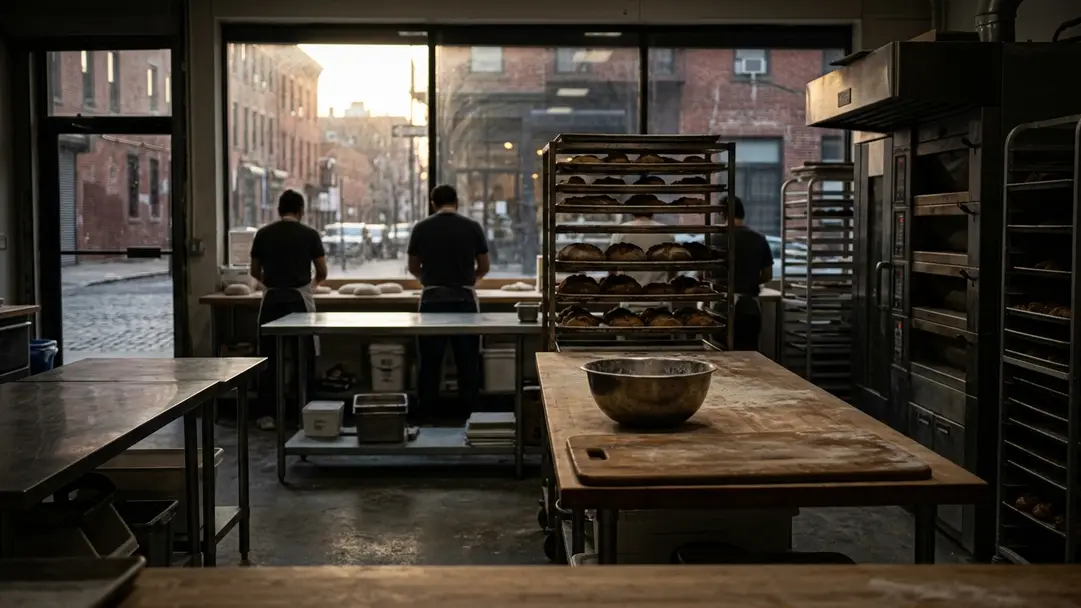
Before Williamsburg became a shorthand for a certain kind of expensive cool, it was a place where you could rent a garage bay and turn it into a dining room. That distinction matters more than nostalgia allows. The neighborhood's culinary reputation was not designed in a boardroom—it was improvised out of cheap square footage, concrete floors, and cooks who wanted somewhere to test an idea without a Manhattan lease strangling them first.
This piece works through that history as a sequence: the room, then the plate, then the money that eventually reorganized both.
The Industrial Canvas That Birthed a Movement
Between roughly 1998 and 2004, North Brooklyn still carried its manufacturing zoning like an old coat. Warehouse fronts, loading doors, minimally finished interiors—these were not aesthetic choices at first. They were the conditions of entry. A first-time chef-owner could sign a lease on a raw space precisely because nobody had yet decided the space was valuable.
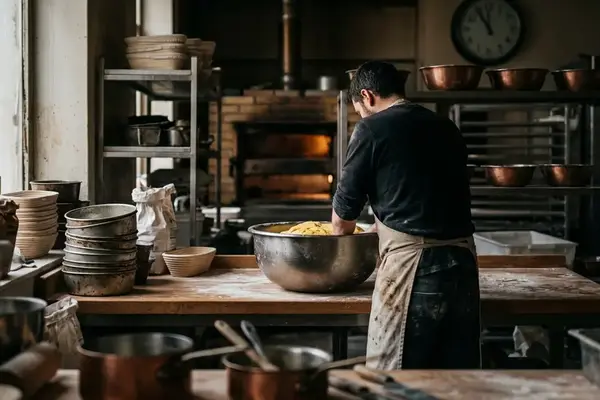
The look that later got branded as "Brooklyn" started as adaptive reuse. Exposed brick stayed exposed because replastering cost money. Reclaimed timber was reclaimed because it was already in the room. Mismatched chairs, visible ductwork, and bare-bulb lighting were what you inherited when demolition and custom millwork weren't in the budget. The design followed the wallet.
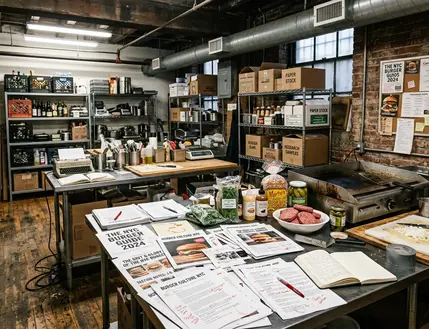
Bedford Avenue and the Northside became the easy shorthand for the scene, and the reason was infrastructure as much as taste. The L train made these blocks reachable for Manhattan diners, while the side streets a short walk off Bedford still felt more workshop than showroom. You could eat somewhere that had, quite recently, been a place where things were built.
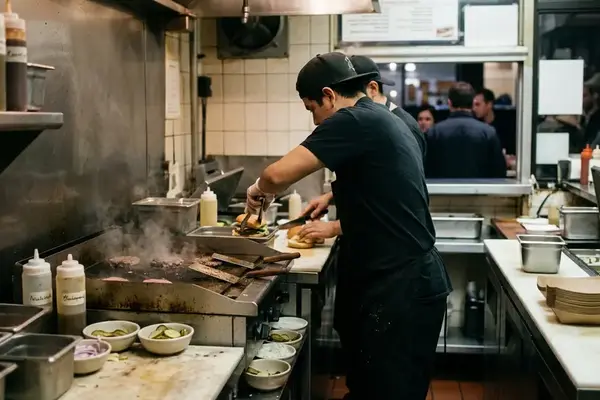
The publication's earliest coverage of this period stayed close to the line. Cooks, patties, buns, prep lists, late-night dining rooms filling up after the last kitchen shifts elsewhere in the city ended. The neighborhood was documented as a kitchen, not as a lifestyle backdrop—a distinction that would blur badly within a decade.
The Golden Era of the Gourmet Burger
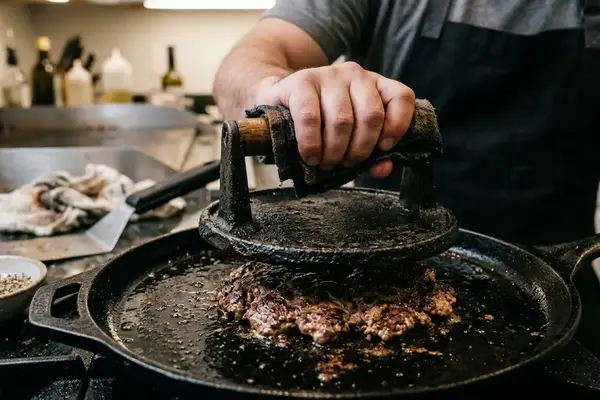
The burger is the cleanest proof of what this era was actually about. Somewhere between 2001 and 2007, chef-run kitchens in Williamsburg started treating a dish that had lived on bar menus for decades as if it deserved restaurant-level discipline. Sourcing. Grind selection. Sear. Bun architecture. Pickle acid. Sauce balance. All of it applied to comfort food that had previously been coded as an afterthought.
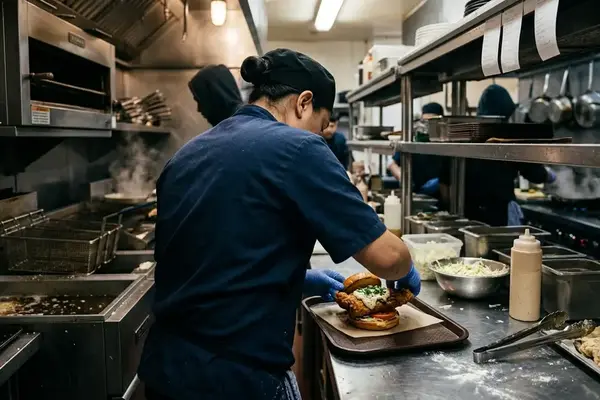
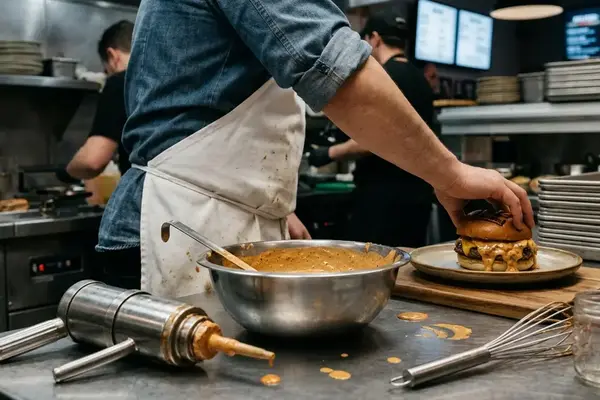
DuMont's burger became the reference point for a reason, and it wasn't luxury. The appeal came from engineering: a thick, juicy patty, a bun sturdy enough to survive the drippings, melted cheese that behaved like structural mortar rather than garnish, and a plate that still read as dinner. Not stunt food. Dinner.
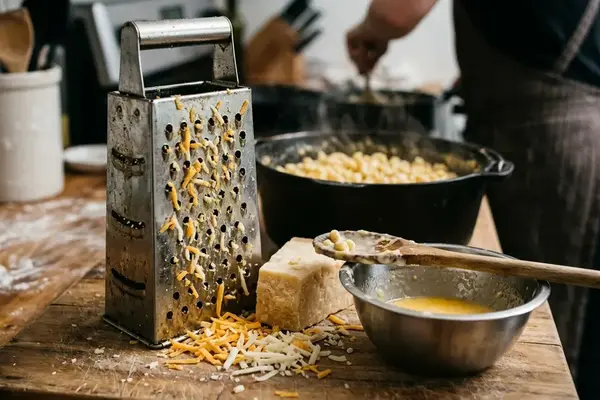
The innovation was never novelty. It was obsessive execution of familiar food—the same cultural logic that produced elevated mac and cheese, careful fried chicken, and honest neighborhood steak frites.
The operational tells were consistent across the pioneering kitchens. Custom beef blends instead of anonymous pre-formed pucks. A patty sized to hold medium-rare in the center. Buns toasted specifically to resist soak-through. Toppings kept within bite height, built for a mouth rather than a camera. This was a blueprint, and it changed how the wider city thought about the gourmet burger.
Which brings up the modern counter-argument worth settling once. A hyper-expensive, truffle-slicked wagyu burger is not automatically superior to a well-built classic, and a high price tag is not automatically a scam. The relevant test is engineering: does the cost reflect sourcing, technique, and balance, or are luxury toppings papering over a burger that was assembled poorly? The Williamsburg pioneers passed that test on execution, not on receipts.
The Shift from Grit to Gloss
The gentrification story runs in a predictable order. First the aesthetic was improvised by independents. Then diners and press recognized it. Then better-capitalized hospitality groups copied it—and could afford to do so at scale.
The hinge was zoning. The city adopted the 2005 Greenpoint-Williamsburg rezoning in May of that year, covering roughly 184 blocks and opening former industrial waterfront to substantial residential development. That single act reset the ground under every storefront lease within walking distance.
The pressure did not arrive in one day. It came through lease cycles, tenant-improvement demands, liquor-license competition, brunch volume, and landlords who began pricing storefronts for national or multi-unit operators rather than a first-time chef-owner with a good idea and thin capital. Between 2005 and 2015, the warehouse look moved from local improvisation into a reproducible hospitality package.
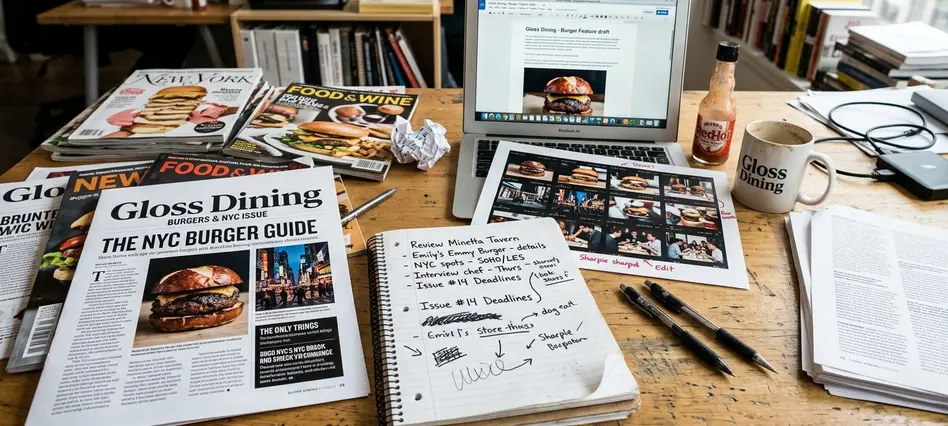
The signs were legible if you knew where the materials came from. Edison bulbs installed as decor rather than left over from the building's working life. Reclaimed wood purchased as a finish rather than salvaged from the room it stood in. Menus designed to travel well on a phone screen. Larger PR budgets. Dining rooms engineered to look "Brooklyn" before serving a single regular.
Note: This diagnosis is strongest for the Northside, Bedford Avenue, and the waterfront-adjacent blocks. South and East Williamsburg followed a slower, less uniform path. Transit access, persistent industrial tenancy, Hasidic residential patterns, and warehouse uses created different commercial pressures there, and the restaurant turnover reflected that. The gloss narrative fits one corridor cleanly and the rest of the map only roughly.
Worth saying plainly: not every room with brick and bare bulbs is a soulless replica. Some later operators inherited genuinely industrial spaces and used the same materials because they were affordable, practical, or already there. Materials alone prove nothing.
Finding the Surviving Culinary DNA
The original spirit did not die. It evolved, and in many cases it relocated to the less-photographed side streets. Finding it is an audit, not a treasure hunt—because a room can wear the costume without keeping the ethos.
Use the 2005–2010 period as the benchmark, and look for behaviors rather than surfaces:
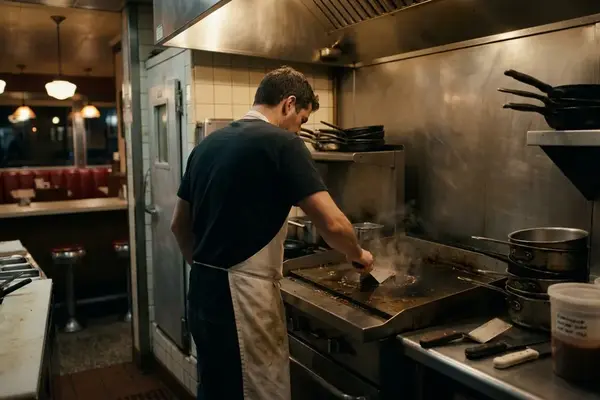
- A chef-owner or owner-operator physically present on the floor or in the kitchen during peak service.
- A concise menu built around a handful of dishes the kitchen can execute cleanly every night.
- A burger or comfort-food anchor that has not been buried under luxury toppings to justify a markup.
- Specials that respond to prep and season rather than a press calendar.
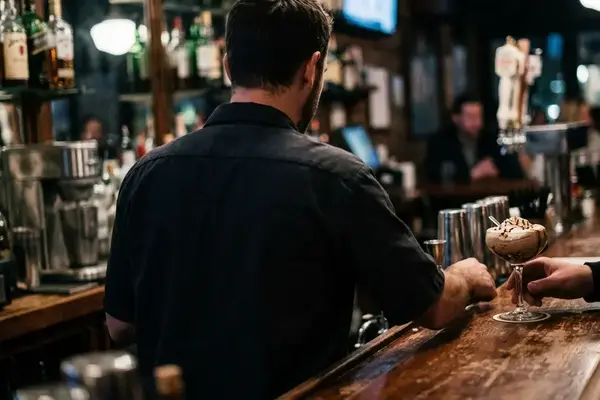
- A bar program that supports the food instead of carrying the entire concept.
- Staff who can explain a dish's build without reciting a branding script.
The strongest survivors often sit off the most photographed corridors now. Side streets east of Bedford. Mixed-use blocks closer to the industrial edges. Older addresses that endured because the operator owns the building, holds a favorable lease, or simply kept overhead modest enough to weather the rent climb.
Quick Tip: Watch how regulars get treated. A foundational spot recognizes its neighbors without turning the room exclusionary. That balance—warm to the familiar, open to the stranger, is one of the hardest things for a replica concept to fake, because it takes years of the same people running the same room.
Supporting these kitchens is not sentimentality. They are the working memory of how the borough earned its reputation in the first place, and that memory is not stored in the brick.
The Price of a Polished Neighborhood
Be honest about the trade. The polished neighborhood delivered real gains—more consistency, safer buildouts, easier reservations, broader wine and cocktail programs, better service infrastructure. Accessibility went up. For many diners, so did reliability.
By the post-2015 period, though, the industrial Brooklyn look had become an exported restaurant language, visible far beyond Williamsburg and fully detached from the rent, zoning, and maker-culture conditions that produced it. The cost of that polish is operational. Higher buildout budgets demand broader appeal. Higher rents reward brunch volume and brand-safe menus. Higher investor expectations punish the imperfect-but-memorable kitchen that needs a year to find its audience—exactly the kind of kitchen that built the scene.
The neighborhood traded raw, unpredictable innovation for reproducible comfort. That is not a villain story; it is a genuine exchange with genuine winners. But the exchange is not neutral, and it is still being paid for, one lease renewal at a time.
So the decision lands on the diner, concretely and every single night. When you choose dinner in Williamsburg, are you funding the owner-run kitchens and legacy burger counters that built this borough's name, or the polished replicas that learned how to monetize its atmosphere?

Leave a Comment