

What's Inside
- A November Evening on Bedford Avenue
- The Architecture of a Brooklyn Classic
- Dumac and Cheese and the Vegetarian Triumph
- The May 2006 Turning Point
- Bring the Williamsburg Legacy to Your Kitchen
A November Evening on Bedford Avenue
Cold air, warm glass
November in Williamsburg has a way of sharpening appetite. The wind comes off the East River with a metallic bite, coats hang heavy over bar stools, and a storefront with light in the windows can feel less like commerce than shelter.
That was the right weather for DuMont Burger to arrive at 314 Bedford Avenue in November 2005. It was not some loose chapter in a generic Brooklyn burger boom. It was a dedicated Bedford Avenue spin-off from DuMont, the already-admired restaurant at 432 Union Avenue, and that parentage mattered. The burger counter carried the confidence of a kitchen that had already earned neighborhood trust.
The room before the reputation
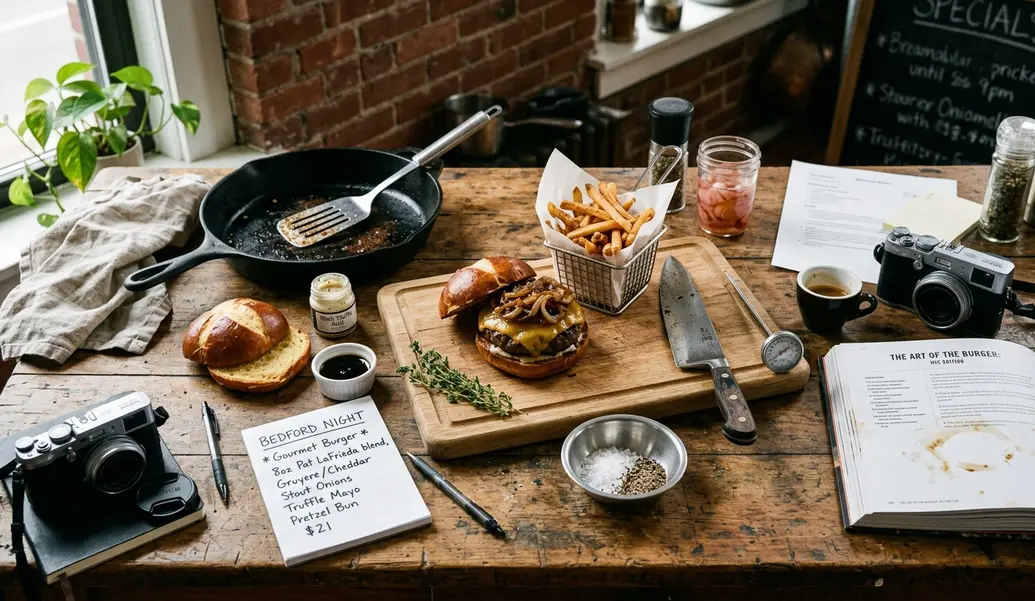
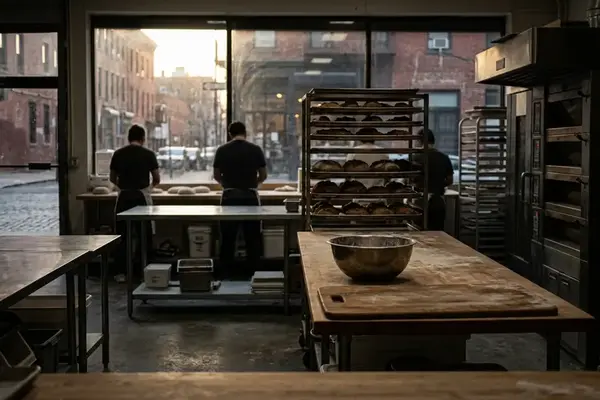
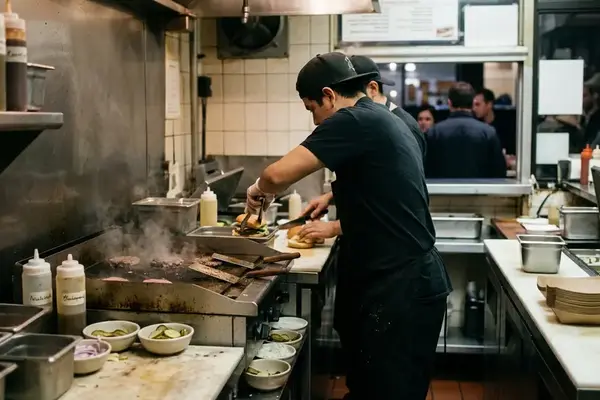
Mid-2000s nyc dining had not yet sanded off all its rough edges. In Williamsburg, the best rooms felt lived-in rather than staged: close tables, servers moving fast, plates landing without ceremony, and a crowd that mixed locals with friends-of-friends who had heard there was something worth crossing town for.
DuMont Burger fit that moment because it treated casual food seriously without turning dinner into a lecture. The practical move was simple: take the burger people were already talking about, give it its own address, and let the storefront work as a neighborhood regular instead of a special-occasion dining room.
Quick Tip: The useful way to read DuMont Burger is through lineage. Start with DuMont on Union Avenue, then follow the burger to Bedford Avenue; the spin-off makes much more sense that way.
Calling it merely a ‘hipster burger joint’ misses the operational story. The address, the parent restaurant, and the supplier-driven build all made the place more specific than the label allows.
The Architecture of a Brooklyn Classic
The grind came first
The burger’s foundation was its custom beef blend sourced from Piccinini Bros., a New York butcher known for supplying restaurants with specialized meat programs. That detail sounds small until the patty hits heat. A coarse, rich blend behaves differently from a lean, pre-formed supermarket puck: it sears harder, eats juicier, and carries seasoning on the crust rather than needing tricks inside the meat.
This was the quiet economics of the plate. Instead of spending attention on a tower of toppings, the kitchen put value into the parts that touched the tongue first: beef, bread, heat, salt, and timing. In the 2005-2006 gourmet-casual burger moment, that approach let a restaurant charge more for sourcing and technique without dragging the burger into fine dining stiffness.
The bun did real work
The brioche bun was not decoration.
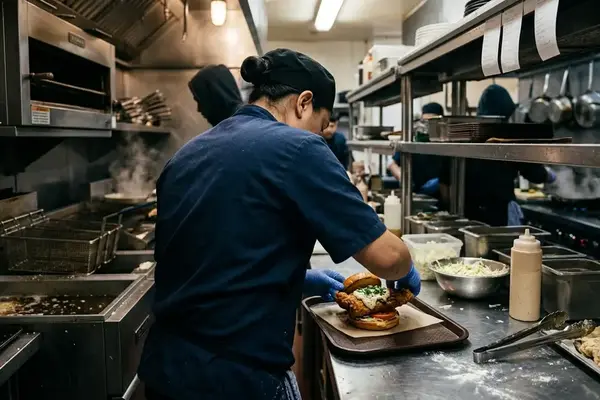
It brought butter, softness, and a little sweetness, but its real job was structural. A lesser bun turns soggy at the first rush of beef juices; a proper brioche gives way without collapsing immediately. That balance is easy to overlook because the best bun does not announce itself. It simply keeps the burger coherent from first bite to last.
Restraint was the kitchen’s strongest design choice. The burger did not need to hide behind a pantry shelf of toppings. High-quality supplier ingredients were allowed to speak plainly, and that plainness became part of the DuMont legacy: not minimal for the sake of fashion, but edited because the core tasted complete.
Summary: The classic build worked because each component had a job: Piccinini Bros. beef for richness, brioche for absorption and tenderness, and a restrained assembly that kept the burger from turning muddy.
Dumac and Cheese and the Vegetarian Triumph
The side that refused to stay on the side
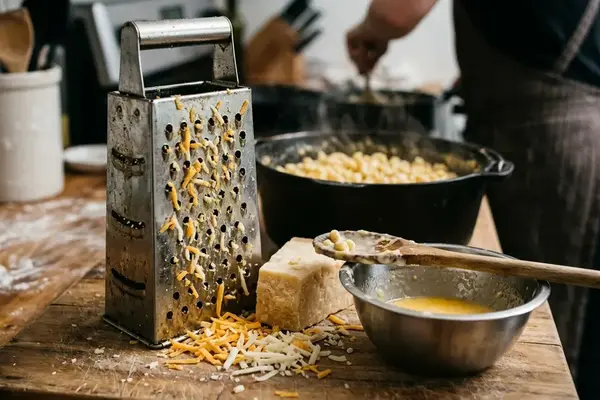
The supporting cast mattered. DuMont Burger’s sides & appetizers did not feel like filler ordered out of obligation while waiting for the main event. The prime example was Dumac and cheese, a house-branded comfort dish tied so directly to the DuMont name that it sounded less like a menu item than a family nickname.
It was heavy in the way macaroni and cheese should be when nobody is pretending it is salad. Dairy-rich, baked-comfort oriented, and unapologetically filling, Dumac and cheese drew its own kind of loyalty. Some dishes invite sharing; this one made sharing feel noble and slightly regrettable.
The veggie burger had a point of view
The vegetarian option proved the kitchen could do more than translate beef logic onto a meatless patty. Its distinguishing move was garlic-laced tzatziki, which brought acidity, dairy richness, cucumber coolness, and herbal lift.
That topping changed the whole read of the dish. Instead of chasing the beef burger’s smoke and fat, the veggie burger leaned into contrast: creamy against savory, sharp against mellow, fresh against griddled. For a burger shop, that was a quietly important signal. The kitchen was not treating vegetarian diners as an interruption.
Note: The best lesson for home burger recipes is not to copy every plate at once. Copy the logic: one rich anchor, one cooling contrast, and no topping that cancels out the main ingredient.
The May 2006 Turning Point
When a local secret became legible
May 2006 changed the room.
The New York Times review appeared within the May 2006 window, roughly six months after the November 2005 opening. That timing matters. DuMont Burger had enough neighborhood life behind it to feel real, but it was still young enough that mainstream attention could redirect the crowd almost overnight.
The review did not create the restaurant from nothing. What it did was make a casual Brooklyn storefront legible to diners outside Williamsburg, especially those who still needed a critic’s signal before crossing borough lines for a burger. At dumontburger, our editorial read is that this review marked a shift in how mainstream critics viewed casual Brooklyn dining: execution, sourcing, and atmosphere could justify citywide travel even when the room stayed relaxed.
The pressure of being found
That kind of attention brings a particular operational problem. The restaurant has to feed regulars who remember the quieter weeks while also absorbing culinary tourists who arrive with expectations already inflated by print. Lines get longer. Tables turn differently. Staff begin explaining what locals once understood without asking.
The hard part is not fame; it is protecting the feel of the room after fame arrives.
DuMont Burger’s challenge was to keep the neighborhood soul intact while serving a broader audience. That meant the burger still had to eat like the burger people had fallen for before the clipping made the rounds. The sourcing could not become a talking point only. The bun still had to hold. The sides still had to land hot and generous.
Quick Tip: In legacy restaurant operations, press attention is best treated as a stress test. If the signature item cannot survive volume, the story will outrun the kitchen.
Bring the Williamsburg Legacy to Your Kitchen
Start at the butcher counter
For a home version, do not begin with toppings. Begin where DuMont Burger’s architecture began: the grind. Visit a local butcher and ask for a coarse-ground beef blend with visible fat and enough richness for a juicy medium-rare burger. Avoid pre-formed ultra-lean patties for this style; they fight the very texture you are trying to build.
At home, the result is an approximation rather than a duplicate, because a restaurant’s exact grind, griddle seasoning, supplier specs, and service rhythm are difficult to reproduce. Still, the right request at the butcher counter gets the home cook much closer than a package of lean patties ever will.
- Form patties just before cooking so the meat stays loose rather than compacted.
- Season the exterior with salt, not the interior like a meatloaf mix.
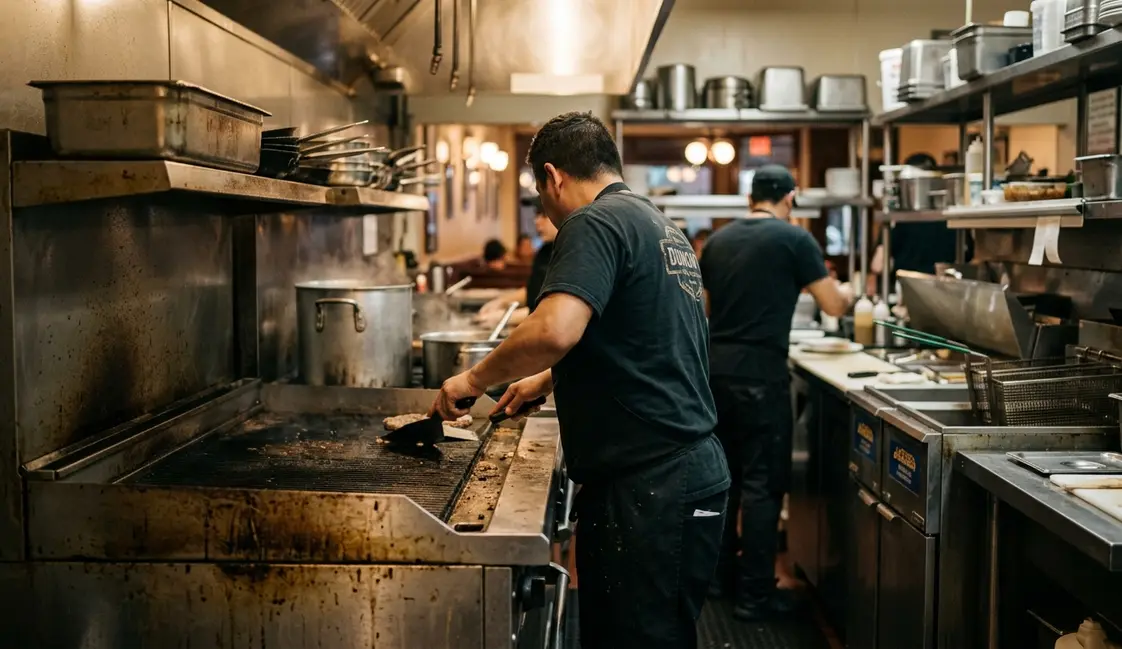
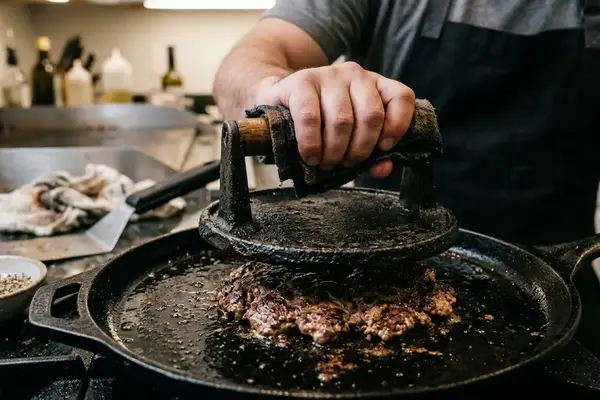
- Cook over high heat in a cast-iron skillet or on a very hot griddle until a crust forms.
- Rest only briefly; the burger should reach the bun while it is still juicy.
Toast the brioche like it matters
Buy a true brioche bun: buttery, soft, and sturdy enough to take pressure. Then toast the cut sides in butter or directly on the cooking surface for a minute or two, stopping when the bread turns golden and slightly crisp. That toasted layer is not cosmetic. It helps the bun stand up to beef juices instead of surrendering on contact.
Context changes the result. A home gas range, outdoor grill, and restaurant flattop all hold heat differently, and patty thickness will affect crust, doneness, and bun saturation. The practical answer is to watch the food rather than the fantasy: if the bun feels fragile, toast it longer; if the patty is thick, give the crust time to form before chasing color too aggressively.
Do not forget the vegetarian lesson
The DuMont legacy was never only about beef. For a veggie burger with a nod to Bedford Avenue, mix thick yogurt with grated or minced garlic, cucumber, lemon, salt, and herbs. Keep it cold. Spoon it on after the patty cooks so the sauce stays bright instead of turning warm and slack.
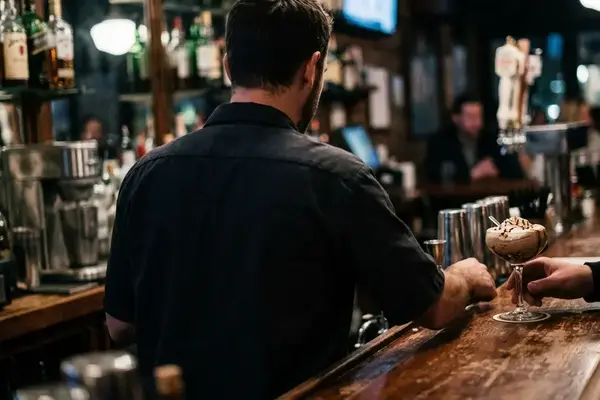
Boozy shakes can wait for another night; the move today is simpler and better. Go to the butcher, ask for a coarse high-fat grind, buy sturdy brioche on the way home, and mix the garlic tzatziki before the skillet gets hot.
Leave a Comment