

The Secret Is in the Unadulterated Sear, Not the Sauce
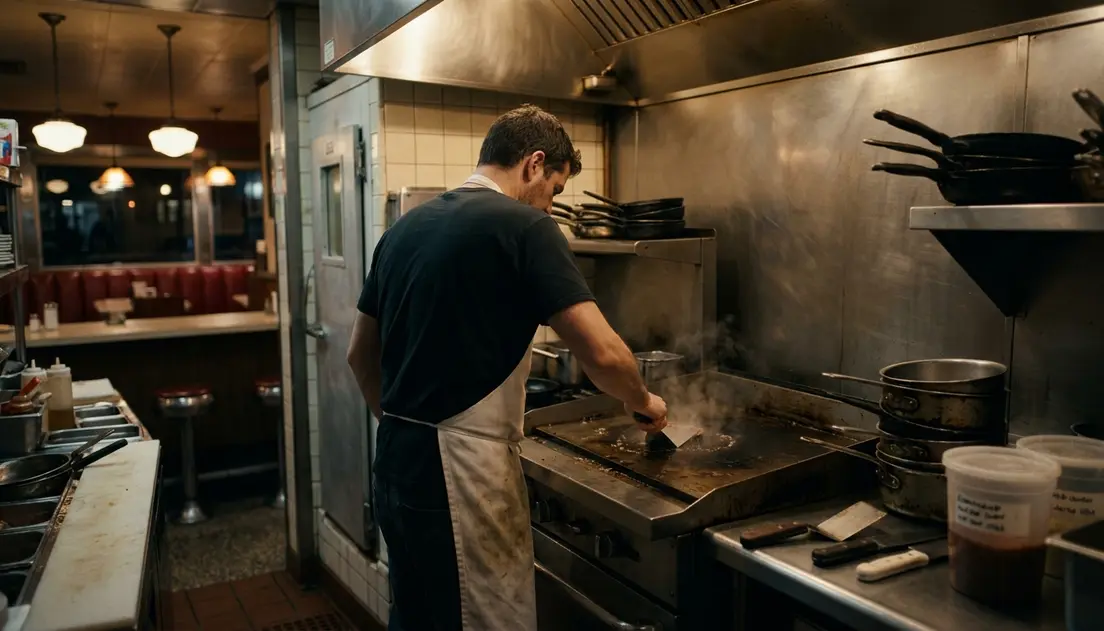
Here is the contrarian truth that separates a real Williamsburg burger from the crowded field of imitators: the thing that made those early-2000s Brooklyn burgers unforgettable was never a secret sauce. It was heat, beef fat, and surface dehydration. Nothing more.
Modern burger culture loves to complicate the patty. Worcestershire folded into the mix, breadcrumbs for bind, a proprietary blend of nine spices whispered about like a family heirloom. The classic DuMont style went the other direction entirely. The patty stayed unseasoned inside, no binders, no filler — and the whole identity of the burger came from what happened when high-fat beef met a screaming-hot dry pan.
That's the Maillard reaction doing the heavy lifting. Surface proteins and sugars brown into something deep and savory, and a great crust does more for flavor than any condiment poured on afterward.
So this piece strips away the gimmicks. The goal is to master the foundation of the iconic thick pub-style burger: the beef, the shaping, the crust, and the timing. Keep the flavor build honest — beef, kosher salt, cheese, bun, lettuce, onion, and pickle. That's the whole cast.
Engineering the Perfect Short Rib and Brisket Blend
Specify the meat before you specify the pan, because the sear depends on fat content and grind size. Everything downstream is negotiable. This is not.
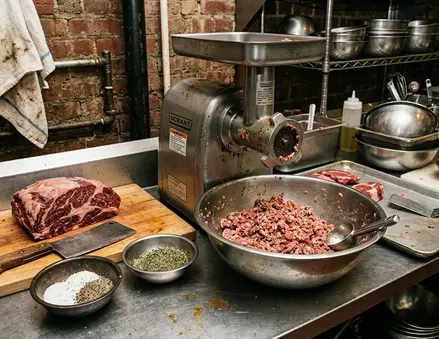
Three cuts carry the load. Chuck gives you the muscle structure that holds a patty together. Brisket brings the deeper, almost roasted beefiness. And boneless short rib supplies the rich, melting fat that renders into the pan and bastes the crust from below.
Ask your butcher for a coarse grind of all three, aiming for roughly 75/25 lean-to-fat by weight. That ratio defined the premium pub burgers of Williamsburg's culinary boom, and it's worth honoring — practitioner accounts of those butcher counters point the same direction. A coarse grind should show visible flecks of fat and muscle, closer to chopped steak than the fine, uniform paste of a supermarket tube.
For two burgers, buy one pound total and divide it into two eight-ounce portions before you shape anything.
Grinding at home? Chill the cubed meat and the grinder parts for 20 to 30 minutes first. Cold metal and cold fat keep the grind clean instead of smearing into a paste.
One honest limit worth naming: this fatty, coarse blend is built for thick medium-rare to medium pub burgers. Press it into an ultra-thin smash patty and it tends to crumble and leak fat. Right blend, wrong application.
Shaping the Half-Pound Pub Patty
Shape each patty right after portioning, and handle it as little as your patience allows. Overwork the proteins and you get a dense, springy hockey puck. The target is a loose matrix that sears like chopped steak.
Form each eight-ounce portion into a disk roughly 4 inches wide and a solid 1 to 1.25 inches thick. Press just enough to hold it together, then stop.
Now the dimple. Push a shallow indentation into the center, about 1.5 inches across and a quarter-inch deep. As the patty cooks, the edges contract and the middle wants to swell into a meatball. The dimple counters that swell, and you keep a flat, even surface for the crust.
Salting the ground beef mixture before shaping pulls it toward a tighter, springier texture — closer to sausage than a loose pub burger. Save the salt for the pan.
Refrigerate the formed patties, uncovered or loosely covered, for 15 to 30 minutes before cooking. Cold fat holds its shape and refuses to render prematurely, which means it's still there to melt and baste when the beef hits the heat.
Mastering the Cast-Iron Crust
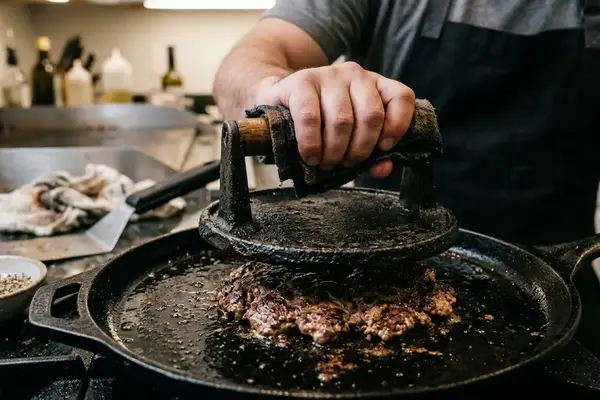
Cast iron is non-negotiable here, and the reason is thermal mass. A heavy skillet stores enough heat to stay blistering hot even when two cold half-pound patties land at once. A thin pan surrenders its heat instantly, and surrender means steam, gray edges, and a weak crust.
Use a full 12-inch skillet for two eight-ounce patties. Anything smaller crowds them, traps steam, and undoes all your careful sourcing. Preheat over medium-high for 5 to 6 minutes, until a faint wisp of smoke appears and a drop of water skitters and vanishes across the surface.
Salt goes on the exterior only, generously, right before the patties enter the pan. Figure roughly three-quarters to one teaspoon of kosher salt total for two patties. Because kosher crystal size varies so much between brands, judge by coverage on the surface rather than trusting a fixed spoon measure.
Cook the first side undisturbed for 4 minutes. Flip once, add the cheese, drop the heat to medium, and give the second side 3 to 4 minutes.
On doneness: USDA recommendations for ground beef preparation call for a 160°F internal temperature. A warm pink center sits below that, so the lower-temperature choice depends on freshly ground meat, cold handling, clean equipment, and your own read on risk. That decision is yours to make with clear eyes.
Building the Architecture of the Burger
Toppings should support the beef, not bury it. Every element here earns its place structurally, not just decoratively.
Start with the bun. Split brioche, toasted in butter for 90 seconds to 2 minutes per cut side over medium heat, until the edges go golden. Toasting isn't about color for its own sake — it builds a rigid, water-resistant surface that survives contact with a juicy patty.
One slice of Gruyère or sharp cheddar per patty, laid down immediately after the flip so it melts across the final 3 to 4 minutes of the cook. No microwave rescues, no foil tents. It melts in the pan or it doesn't melt right.
The Moisture Barrier
Boston bibb lettuce goes on the bottom bun, beneath the patty. That leaf is your dam. It slows the rendered juices from soaking straight into the bread, which is the difference between a burger you can hold and a burger that dissolves in your hands by the third bite. Add one thick-cut slice of red onion, about a quarter-inch, for sharpness and structure.
Acidity on the Side
Keep the acid off the stack. A garlic-dill pickle spear served alongside — not sweet relish, cuts cleanly through the short rib fat between bites, so the first bite stays pure beef and the palate resets on its own terms.
Step-by-Step: Cooking Two Burgers on a Home Stove
Here's the entire cook as one continuous, copyable timeline. Sequence matters: the skillet has to be hot before you season, the cheese melts during the second-side cook, and you build the bun during the rest. That sequencing is what prevents the classic home-stove failure — holding a finished patty while you scramble to toast a cold bun.
- Minute 0 to 5: Preheat the 12-inch cast-iron skillet over medium-high heat. During this same window, toast your buttered brioche buns in a separate pan until the edges are golden. Set them aside, cut-side up.
- Minute 5: Salt both patties generously on the exterior and lay them in the dry skillet with at least an inch of space between them. That gap keeps steam from pooling. Do not touch them.
- Minute 5 to 9: Cook the first side completely undisturbed for a full 4 minutes. Resist every urge to peek or press. Pressing squeezes out the fat you worked to keep in.
- Minute 9: Flip each patty once. Immediately lay a slice of Gruyère on each, and reduce the heat to medium.
- Minute 9 to 12 or 13: Cook the second side for 3 to 4 minutes. If you're using a thermometer, check at the thickest point now and decide your target against the doneness discussion above.
- Rest, then build: Pull the patties and let them rest 3 minutes. Use that window to assemble — bottom bun, bibb lettuce, patty with melted cheese, red onion, top bun. Pickle spear on the plate.
Follow that clock exactly, once, and the whole thing clicks into place: crust on the outside, warm pink center, a bun that holds, and a burger that tastes like Williamsburg circa the boom, no secret sauce required.

Leave a Comment