

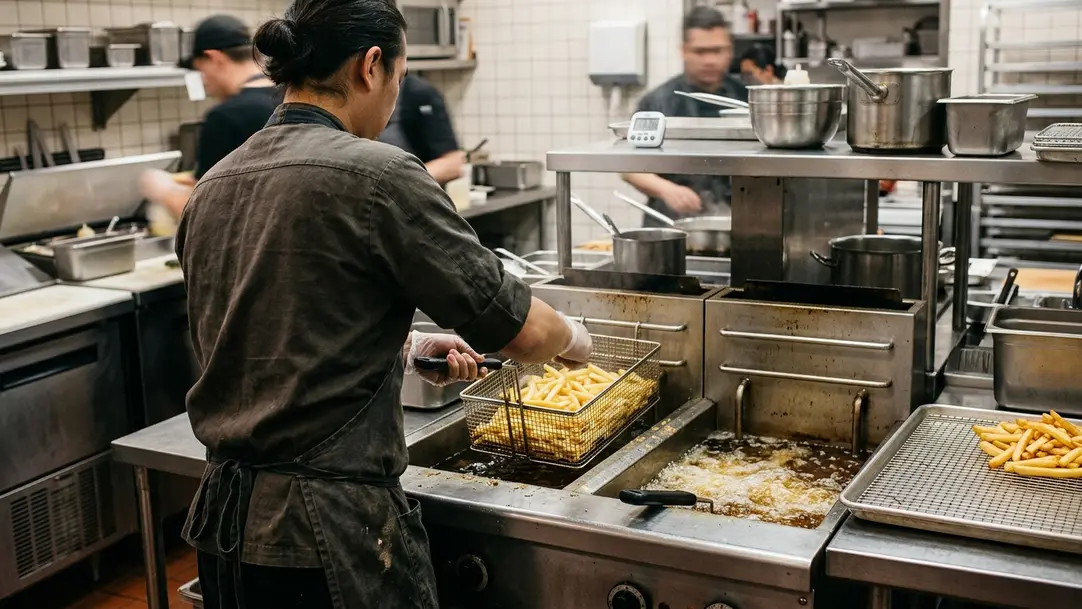
Perfect double-fried French fries are not born from bravery around hot oil. They come from patience, a thermometer, and the old burger-stand wisdom that potatoes need two different jobs done at two different temperatures.
What's Inside
- The Cost of Rushing the Fry
- Selecting and Prepping the Ideal Potato
- The First Fry: Cooking the Interior
- The Crucial Cooling Phase
- The Second Fry: Achieving the Crunch
- The Verdict on Your Fry Game
The Cost of Rushing the Fry
The saddest fry in nyc dining is not limp because the potato lacked promise. It is limp because someone asked one oil bath to do two jobs at once.
What the shortcut actually costs
Dropping raw potato batons straight into screaming hot oil guarantees failure: the outside races toward brown while the center stays dense and undercooked. Turn the heat down too far and the problem changes shape. Fries added to oil below roughly 300°F during the first fry turn heavy and oil-soaked before the center finishes cooking.
Either way, the cook wastes good Russets and a pot of expensive oil. For home-cut fries measuring 1/4 to 3/8 inch thick, plan on two separate oil temperatures rather than one sustained fry. The first oil bath cooks the potato through. The later, hotter bath builds the crust.
Summary: Double-frying is not restaurant fussiness. It separates interior cooking from exterior crisping, which is why the best fries can be fluffy inside and shatteringly crisp outside.
The timeline is not instant. A realistic home run takes roughly 2 to 4 hours from cutting to serving when using a cold-water soak and room-temperature cooling. Stretch the cooling into an overnight chill, and the schedule moves closer to 9 to 18 hours.
The pot setup matters
Use a heavy pot with at least 3 inches of oil, and leave several inches of headspace above the oil line. Wet potatoes make oil climb and bubble hard. That space is not decorative; it gives the pot room to behave.
Selecting and Prepping the Ideal Potato
The fry is decided before the flame comes on. The right potato feels firm and heavy in the hand, with no green patches and no sprouting eyes.
Choose starch over shine
High-starch, low-moisture potatoes like Russets or Idaho-style baking potatoes are the home cook’s best bet. Waxy potatoes may look tidy on the cutting board, but they never give the same mashed-potato softness inside the crust. For burger recipes built around a thick patty, that soft center matters.
Turn up the heat
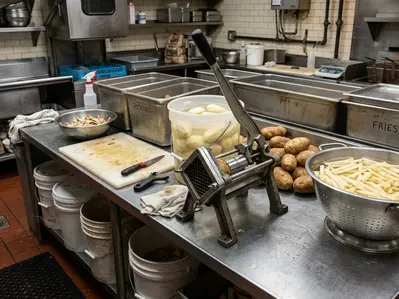
Cutting deserves more attention than most cooks give it. A 1/4-inch baton fries faster and crisps harder, the sort of fry that piles high next to a bistro burger and disappears by the handful. A 3/8-inch baton needs longer blanching but gives the fluffy interior associated with steakhouse plates and old-school burger-stand fries.
The prep sequence
- Scrub large Russet potatoes and peel them if a clean steakhouse look matters.
- Square off the sides if uniform batons are the goal.
- Cut all pieces to 1/4 inch or 3/8 inch, but do not mix sizes in the same batch.
- Submerge the cut potatoes in cold water for 1 to 8 hours.
- Change the water once if it turns cloudy after the first 20 to 30 minutes.
That soak removes surface starch, which helps keep fries from sticking together and scorching early in the oil. It also buys the cook a little calm before the louder part of the process begins.
Note: Do not carry wet potatoes from the soak straight to the fryer. Visible surface water causes aggressive bubbling, slows temperature recovery, and can blister the exterior unevenly.
Dry the potatoes in a salad spinner or between clean towels for 5 to 10 minutes. The surface should look matte, not shiny.
The First Fry: Cooking the Interior
The first fry is a deep-oil blanch. It should feel almost anticlimactic.
Temperature before color
Heat the oil to 315°F to 325°F before adding the first batch. Once the potatoes go in, keep the oil roughly between 300°F and 325°F. This method is only as steady as the thermometer clipped to the pot; judging oil temperature by eye is unreliable for double-fried potatoes.
Add only enough fries to move freely. If the oil takes too long to recover, the potatoes sit in fat instead of cooking cleanly. Work in batches small enough that the oil returns to its target range within 60 to 90 seconds after the potatoes are added.
What done looks like
For 1/4-inch fries, the first fry usually takes 3 to 5 minutes. For 3/8-inch fries, use 5 to 7 minutes. The decision to pull them comes from texture rather than color.
They should look pale and limp. Not golden. Not snackable. A properly blanched fry bends like it has given up, which is exactly what sets up the fluffy interior.
Quick Tip: Remove blanched fries to a wire rack set over a sheet pan, not to a paper towel pile. Steam needs somewhere to go, or it softens the surface you just worked to prepare.
In high-volume kitchens, this is the point where fry stations separate the serious cooks from the impatient ones. The potato is cooked, but it is not finished.
The Crucial Cooling Phase
Now comes the pause.
Why the rest changes the crust
Spread the blanched fries in a single layer on the rack and let them rest for 30 to 60 minutes at room temperature before the second fry. Trapped steam leaves the surface. The cooked starches firm as they cool, which helps the second fry build a cleaner crust.
The underlying principle is starch retrogradation, a piece of potato science that matters far more in the fryer than it sounds on paper. For readers who want the technical trail, University of Idaho Extension material on starch retrogradation and potato frying properties explains the potato-quality side of the equation.
Room-temperature rest, refrigerator chill, or freezer hold
- Room-temperature cooling: Best when dinner is soon. Rest the fries 30 to 60 minutes in a single layer.
- Refrigerator chilling: Better for a firmer exterior. Chill the rack of fries uncovered for 2 to 12 hours after they stop steaming.
- Freezer staging: Useful for make-ahead service. Freeze blanched fries in a single layer for 1 to 3 hours, then transfer them to a covered container or freezer bag.
Do not stack hot blanched fries in a bowl. The bottom layer steams for 10 to 20 minutes and loses the dry surface needed for crisping. That is how a promising batch turns into a soft pile before the second oil bath even starts.
Summary: Cooling is not dead time. It is the structural phase that lets the fry trade steam for crunch.
The Second Fry: Achieving the Crunch
The second fry is the finish, the applause line, the moment that makes a plate of fries smell like a Saturday lunch counter.
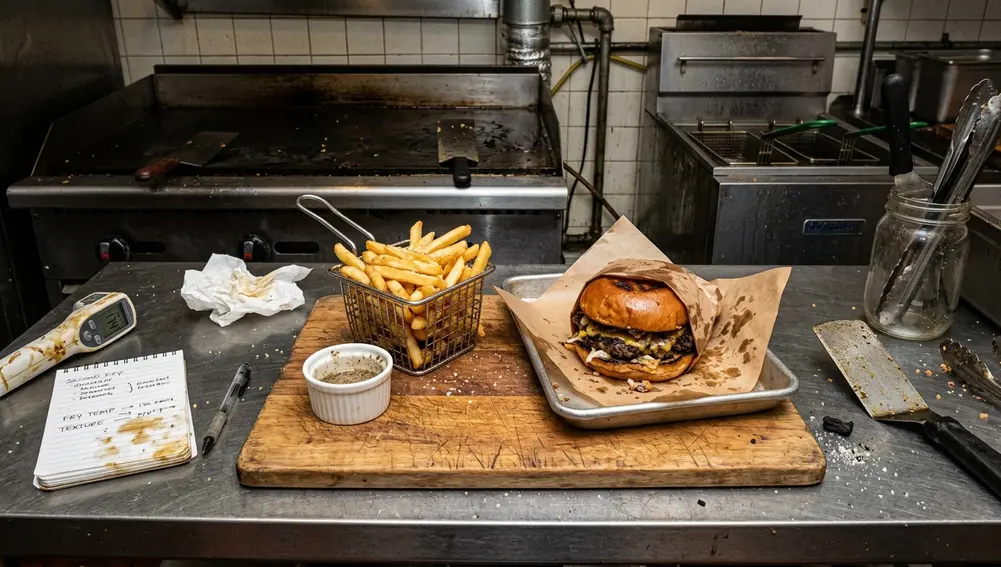
Heat the oil to 365°F to 375°F before adding the cooled fries. Keep the oil above 350°F during frying for a crisp crust. The potato interior is already cooked, so this stage focuses on rapid surface dehydration.
Small batches matter here. Crowd the pot and the oil temperature plummets. The fries sit, the crust stalls, and the bubbling tells on you.
Listen to the pot
Second-fry timing is usually 2 to 4 minutes for 1/4-inch fries and 3 to 5 minutes for 3/8-inch fries. Watch for deep golden brown color, but listen too. As surface moisture cooks off, the bubbling settles down. That quieter pot often signals the crust is ready.
Lift the fries, drain them briefly, and season within 30 seconds while the surface still carries a light sheen. Fine salt adheres more evenly than coarse salt. Toss the fries in a warm bowl for 10 to 15 seconds rather than salting only from above.
Quick Tip: If boozy shakes are on the menu, season the fries a touch more assertively. Cold, sweet richness makes a crisp salty fry taste even sharper.
The Verdict on Your Fry Game
Proper double-frying transforms a humble root vegetable into something with real texture. The method asks for patience, temperature control, and a willingness to manage hot oil twice. In return, it gives the kind of fry that can stand next to a seared burger without playing backup.
Double-Fried Fry Run Sheet
- Cut Russet potatoes into 1/4- to 3/8-inch batons.
- Soak in cold water for 1 to 8 hours.
- Dry thoroughly for 5 to 10 minutes.
- First fry at 315°F to 325°F until pale and limp: 3 to 7 minutes depending on thickness.
- Cool in a single layer on a rack for 30 to 60 minutes, or chill longer if planning ahead.
- Second fry at 365°F to 375°F until deep golden and crisp.
- Season within 30 seconds, then serve fast.
For a burger-night service window, complete the cutting, soaking, drying, and first fry 1 to 6 hours before serving. Hold the cooled blanched fries on a rack in the refrigerator until 10 to 15 minutes before the burgers come off the grill or skillet. That timing respects the dumont legacy approach to sides & appetizers: the fry is part of the plate, not an afterthought in a paper-lined bowl.
Serve within a few minutes of the second fry for the crispest texture. After 10 to 15 minutes, steam from the interior starts softening the crust. Pair thick burgers or steakhouse-style sandwiches with 3/8-inch fries; choose 1/4-inch fries when the goal is a thinner, faster-crunching pile.
Will you stick to the convenience of frozen bags, or are you ready to commit the time required for true steakhouse-quality crunch?



Leave a Comment