

The Anatomy of a Culinary Anomaly
Skate wings possess zero bones, relying entirely on a central cartilage structure that yields distinct, sweet strands of meat when cooked.
That single anatomical fact explains why the crispy skate sandwich became such an odd little marvel in the dumont legacy. It was not a burger pretending to be lighter. It was the seafood counterpart to Williamsburg’s beefy, brioche-stacked moment, built with the same grammar: soft bun, hot center, cold crunch, sharp sauce.
What's Inside
- The wing structure that made skate work as a sandwich filling
- Why Brooklyn’s gourmet burger boom made room for a technical fish sandwich
- How freshness, skinning, and cold-water sourcing shape flavor
- The breading and frying method that protects delicate meat
- The bun, sauce, lettuce, and pickle choices that keep the bite balanced
- A same-day home plan for buying, frying, and assembling skate
Why the Wing Mattered First
The edible meat sits on either side of a cartilage plate, and after cooking it lifts away in striated bands. That texture is the whole trick. A thinner whitefish fillet can collapse under aggressive breading; skate has a fibrous pull that stands up to a serious crust while staying tender inside.
The wing’s thin profile also gives a cook a practical frying window. A breaded portion can brown quickly while the interior stays moist, commonly in a short 3 to 5 minute range depending on thickness.
That is why the sandwich felt so memorable. It looked familiar from across the table, like a fish fillet sandwich with better posture. Then the first bite gave away the secret: sweet, scallop-like strands under a shattering shell.
Elevating Comfort Food in Classic Brooklyn
Brooklyn’s early 2000s through early 2010s dining mood made space for this kind of move. Taverns were no longer content to treat burgers, fries, sandwiches, beer, and sides & appetizers as background noise. Kitchens took barroom formats seriously and gave them chef-level attention.
The Menu Bet
A skate sandwich was a high-risk item to park beside pub fare. It required fresher handling than frozen whitefish, more butchery than a burger patty, and enough speed to satisfy a dining room that still expected comfort food pacing.
That tension made it exciting.
The familiar format did the hospitality work. Fried fish on bread, tartar-style acidity, crisp lettuce, pickles: nobody needed a lecture before ordering. The elevated part came from the ingredient itself, a fresh skate wing carefully skinned and fried so its fibrous sweetness stayed intact.
Where Nostalgia Met Technique
The sandwich belonged to the same nyc dining chapter as serious burger recipes, hand-cut fries, and boozy shakes that tasted like dessert but arrived with a grown-up wink. It was not trying to replace the burger. It gave the menu a second anchor for guests who wanted comfort without ground beef.
In operational terms, that matters. A menu with one great burger can become predictable; a menu with a great burger and a beautifully handled skate sandwich starts to feel like a kitchen with range.
The Science of Sourcing and Prepping Skate
Sourcing is the first cooking decision, not a purchasing errand. Skates are elasmobranchs, like sharks and rays, and their tissues can develop an ammonia-like smell when urea breaks down after harvest. A reputable cook judges the fish with the nose before the knife comes out.
Note: Skate is not a forgiving buy-it-and-forget-it fish; if the counter cannot say when it arrived or it smells even faintly sharp, choose another seafood plan for the night.
What Fresh Skate Should Tell You
Fresh skate should smell clean and marine, not chemical. Once purchased, it belongs on ice or in the coldest part of the refrigerator, then in the pan the same day. For a home kitchen, the practical clock is tight: cook it ideally within 6 to 12 hours of bringing it home.
Winter skate from cold-water fisheries has the clean, mildly sweet profile that makes this sandwich sing; official background on winter skate biology and sustainable harvesting gives useful context on the species itself.
The Butchery Work Behind the Bite
The skin is the first hurdle. Skate skin is tough and sandpaper-like, which is why many home cooks should ask for it removed at the counter. From there, the sequence is tidy but unforgiving: trim ragged edges, cut along the cartilage lines, and portion the fillet so thin edges do not overcook before the center is done.
The best restaurant versions made that labor invisible. The guest saw a golden sandwich. The kitchen saw receiving standards, skinning skill, portion control, and a cook watching the fryer like a hawk.
Mastering the Crunch: Breading and Frying
The goal is armor, not bulk. Skate needs a sturdy crust that protects the delicate interior, yet the coating cannot become so thick that the fish disappears.
Beer Batter Versus Panko
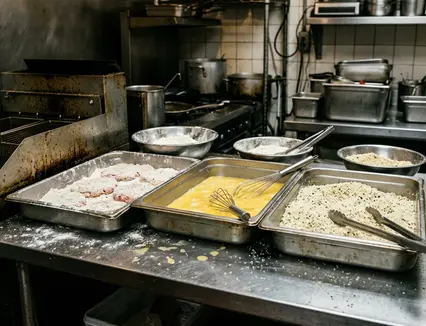
Beer batter can be delicious, especially when the batter is cold and the oil is steady. For a skate sandwich, though, a three-stage breading gives better structure: seasoned flour first, beaten egg second, panko or coarse fresh crumbs third. Each layer has a job. Flour dries the surface and creates adhesion. Egg binds. Coarse crumbs deliver the crunch.
Season the flour rather than only the fish. Salt and pepper should visibly speckle it, with paprika or cayenne if the sandwich wants a warmer edge. That way the crust carries flavor in every bite instead of acting like plain packaging.
The Frying Window
Use a heavy skillet and enough neutral oil to come 1/4 to 1/2 inch up the pan. Bring the oil to 350°F to 365°F before the fish goes in. A thin sandwich portion commonly needs 2 to 3 minutes per side, ending deep golden with flesh that separates cleanly from the cartilage structure.
Quick Tip: Drain fried skate on a wire rack, not paper towels, for the first few minutes so steam does not soften the underside of the crust.
A thick portion may need a little more time at the lower end of that temperature range. Thin wing edges are less patient, so trim or portion them before breading rather than hoping the skillet will forgive the geometry.
Building the Perfect Sandwich Architecture
Once the fish is fried, every topping needs a reason to be there. The sauce, bun, lettuce, and pickles are not decoration. They manage fat, heat, crunch, and moisture.
Acidity Does the Heavy Lifting
Lemon juice, chopped capers, pickle brine, or a sharp tartar-style sauce keeps the sweet skate from tasting heavy. This is where the sandwich borrows from old fish-fry memory while still feeling tailored and restaurant-worthy.
The sauce should be bright enough to cut through the fried crust but not so loose that it floods the crumb coating. A thin layer on the bottom bun and a smaller swipe near the top usually does more than one sloppy spoonful.
The Bun Has a Job
A toasted brioche bun or soft potato roll gives compression without collapse. Toasting the cut sides creates a fat-resistant surface that slows sogginess, which matters when a hot fillet and sauce meet bread.
Cold lettuce and acidic pickles should touch the hot fish directly or sit just above the sauce. That placement creates contrast in the first bite, not just at the edges. Assemble too early and steam gets trapped between bun and crust, turning the panko shell soft before it reaches the table.
Summary: The memorable version is hot-crisp, cold-tangy, sweet, salty, and soft in the same bite.
How to Fry Your Own Skate Sandwich Tonight
Call the fishmonger first. The success of this sandwich depends more on fresh, properly trimmed skate than on any clever sauce upgrade.
Ask These Three Questions
- When did the skate arrive?
- Has it already been skinned?
- Does it smell clean and marine rather than sharp or ammonia-like?
If those answers are clear, buy enough wing for one substantial sandwich portion per person. Keep it on ice for the ride home, then store it in the coldest part of the refrigerator until breading.
Set Up the Breading Station
- Place seasoned flour in the first shallow pan.
- Beat eggs in the second pan.
- Add panko or coarse fresh crumbs to the third pan.
- Pat the skate dry before flouring so the coating adheres instead of sliding off.
- Press the crumbs firmly onto the wing, especially along the edges.
Heat neutral oil in a heavy skillet to 350°F to 365°F. Fry the skate until golden on both sides, drain briefly on a rack, and salt it while hot.
Assemble Without Waiting
Use this order: toasted bottom bun, thin layer of tartar or lemon-caper sauce, hot fried skate, pickles or lettuce, second small swipe of sauce, toasted top bun.
Call a fishmonger today and ask when the skate arrived; if the answer is solid, bring it home, bread it, fry it, and build the sandwich within a couple of minutes of draining the fillet, while that panko shell is still shattering-crisp and the strands underneath are hot and sweet.




Leave a Comment