

What's Inside
- How the Burger Platter Moved Past the Fryer Basket
- Cold Cucumber Ribbons for Bacon, Cheddar, and Bourbon Glaze
- Cider-Pickled Fennel Slaw Against Roquefort and Gorgonzola
- Charred Snap Peas and Lemon Beside a Mushroom Swiss Patty
- Four Blue-Cheese Burgers, Two Sides, One Half Hour
A great burger already carries plenty of richness: crusted beef, melted cheese, a buttery bun. The side dish decides whether the last bite tastes as good as the first. Three crunchy, non-fried sides do that job especially well, and each one suits a different style of build.
How the Burger Platter Moved Past the Fryer Basket
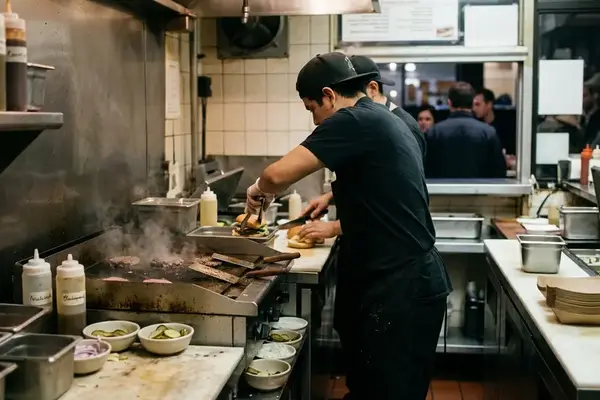
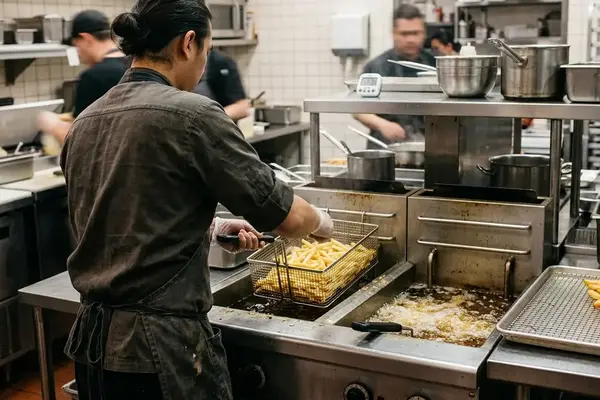
The burger-and-fries plate grew out of the mid-century drive-in kitchen, and the logic was operational. A griddle handled patties and buns while a fryer sat beside it as a parallel station, turning out a hot, repeatable accompaniment on the same rhythm. The two items never needed to share fat. They needed to land on the tray at the same moment, and that coordinated output locked the pairing into American diner culture for generations.
Then the burger itself got bigger in flavor. Gastro-pub menus and ambitious NYC dining rooms moved toward dry-aged beef, chuck blends ground with generous fat, triple-cream cheeses, thick-cut bacon, and sweet glazes. Dry aging concentrates beefy, nutty flavor without making the meat fattier; the blend's fat ratio drives most of the richness. Stack bacon, glaze, and a soft cheese on top of that, and a pile of fries starts to feel like more of the same.
A side that earns its spot on a rich burger plate passes three practical checks:
- Bright acidity. Vinegar or citrus gets saliva flowing and shifts how heavy each bite feels. It does not dissolve fat, but it resets the palate convincingly.
- A distinct bite. The side should hold its crunch after dressing, a firm counterpoint to a soft toasted bun.
- Little or no grease. A good test is the plate itself: after the side is gone, there should be no oily slick left behind.
Raw ribbons, pickled shavings, and briefly seared pods all meet those checks, each with a different texture.
Cold Cucumber Ribbons for Bacon, Cheddar, and Bourbon Glaze
Smoked bacon, sharp aged cheddar, and a sticky barbecue or bourbon glaze hit hard with salt, smoke, and sugar all at once. What that combination wants beside it is something cold, watery, and clean.
Start with one large seedless English cucumber. Wash it, then draw a wide Y-peeler lengthwise down its length, rotating as you go to produce broad, translucent ribbons. Stop when you reach the soft center, where the flesh no longer holds together as an intact strip. Spread the ribbons loosely over a wire rack set above a tray, sprinkle with 2 grams of fine salt, and leave them for 10 minutes.
They are ready to move on when droplets gather on the tray beneath the rack and the ribbons bend gracefully without collapsing into a wet heap. Blot off surface moisture and chill.
For the dressing, stir together 15 milliliters of unseasoned rice vinegar, 1 tablespoon of chopped fresh dill, and 1/4 teaspoon of cracked black pepper. Reach for unseasoned vinegar specifically. The seasoned bottle adds sugar and salt that pile onto an already sweet glaze. Taste after tossing before adding any more salt.
Keep the Snap Intact
Store drained ribbons and dressing in separate chilled containers. Combine them only within the final 15 minutes before the patties leave the cast iron. Thin ribbons give a delicate, cool crispness, and early dressing softens them fast.
Cider-Pickled Fennel Slaw Against Roquefort and Gorgonzola
Blue cheese is loud. Roquefort and Gorgonzola bring that sharp, mineral, blue-mold pungency, and a pile of jammy caramelized onions adds deep sweetness on top. Shaved fennel answers with anise perfume, cider vinegar, and a dense, juicy crunch. Gruyère melts take the slaw well too, though they bring nutty, savory depth in place of blue-cheese funk.
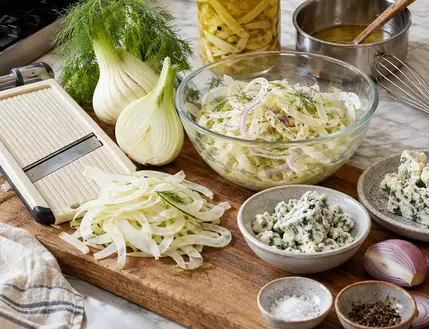
Trim the fennel bulb, set the feathery fronds aside, and cut the bulb into pieces that sit flat on a mandoline. Shave them about 1.5 millimeters thick. That thickness exposes enough surface for the brine to work quickly while keeping more bite than see-through shavings.
For roughly 300 grams of trimmed fennel:
- 120 milliliters apple cider vinegar
- 120 milliliters water
- 4 grams kosher salt
- 1 teaspoon coriander seeds, lightly crushed
Dissolve the salt in the room-temperature vinegar and water, add the coriander, and submerge the fennel in a narrow container so every shaving stays under the liquid. If the brine falls short, mix another batch in the same proportions. Refrigerate.
Dense fennel holds up in acid far better than leafy greens, which makes it the natural prep-ahead component for weekend hosting. Readiness comes down to texture, so drain a sample shaving and bite it. You want acidity that reaches past the surface and a clean, crisp snap.
Protect the Brioche
Drain the slaw thoroughly before plating and set it apart from the bun. Vinegar pooling under toasted brioche undoes all that careful browning. Scatter the reserved fronds over the slaw after draining so their fresh aroma stays bright.
Charred Snap Peas and Lemon Beside a Mushroom Swiss Patty
Roasted mushrooms, nutty Swiss, and garlic aioli make an earthy, savory, umami-heavy burger. A cold side can feel a little thin next to it. Warm snap peas with bitter char spots and a hit of lemon match its depth and still cut through.
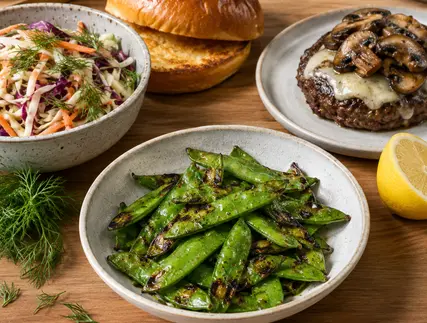
For 200 grams of trimmed sugar snap peas, have ready 2 teaspoons of grapeseed oil, 1 teaspoon of finely grated lemon zest, 2 teaspoons of lemon juice, and flaky salt.
- String the peas and dry them completely. Any lingering water turns into steam in the pan.
- Heat a heavy skillet over medium-high. Test with a single pea: it should sizzle immediately and vigorously on contact. A smoking pan is unnecessary.
- Toss the peas in the oil and lay them in one layer with gaps between pods. Crowding traps moisture and turns a sear into a steam.
- Sear for 90 seconds, turn, and sear another 90 seconds. Look for scattered browned blisters and pods that still push back against your teeth.
- Transfer straight to a bowl and toss off the heat with zest, juice, and flaky salt.
Lemon juice goes in after the peas leave the skillet, and the bowl stays uncovered. Trapped steam, lingering heat, and acid together fade that vivid green to drab olive. Trim the peas and zest the lemon hours ahead, then save the three-minute sear for the moment the patties are resting.
Four Blue-Cheese Burgers, Two Sides, One Half Hour
Here is the whole plan worked through for four blue-cheese-and-bacon burgers with fennel slaw and blistered snap peas. The clock coordinates the cooking, but the burgers' actual doneness decides when everyone eats. This layout assumes the bacon is already cooked and the burger skillet fits all four patties without crowding; a smaller pan pushes service later, and the cooking time itself never shrinks.
30 minutes out. Wet prep comes first. Shave the fennel into its cider brine and refrigerate it. Wash the 200 grams of snap peas, string them, and spread them on clean kitchen towels to dry. Zest the lemon and measure out the juice. Portion the cooked bacon and crumble the blue cheese so the two skillets stay free for patties, buns, and peas.
12 minutes out. Set two heavy cast-iron skillets over medium-high heat. Season the patties. Toast the cut sides of the brioche in the second skillet now, before the vegetable window, so you are not waiting on drippings and shuffling buns between pans. Wipe that skillet out and keep it hot. Patties go into the first skillet.
Near the end of the burger cook. Lay the blue cheese on the patties so it softens before they move. Confirm doneness against the applicable ground-beef food-safety guidance with a thermometer, since a dark crust alone tells you nothing about the center. Move the patties to a rack, where they sit above their released juices, and top with bacon.
Final four minutes, while the patties rest. Test the second skillet with one pea, then sear the peas 90 seconds per side and toss them with lemon off the heat. Lift the fennel out of its brine with tongs, drain it well, and finish with fronds.
Plating. Each plate gets a burger on toasted brioche, a tangle of drained fennel slaw set apart from the bun, and a pile of glossy, blistered peas. The blue cheese meets anise and cider, and the bacon meets warm green crunch and lemon. Nobody misses the fryer.
Leave a Comment