

Picture a crowded table on a Friday night: plates stacked with seared beef patties, blistered onions, and crisp fries, surrounded by small, frosty glasses that keep the table talking past midnight. When hosts bring boozy shakes out alongside hot food rather than saving them as a late-night finale, the formulation has to shift. Replacing a heavy pour of full-strength bourbon with measured doses of sweet vermouth, tawny port, or a lower-strength herbal amaro keeps the drink cold, structured, and easy to sip right next to a rich meal.
What's Inside
- What Defines a Low-ABV Boozy Milkshake?
- How Heavy Spirits and Rich Beef Create Palate Fatigue
- Selecting Fortified Wines, Amari, and Liqueurs for the Blender
- Three Burger and Low-ABV Shake Pairings That Actually Work
- Pre-Batch Your Chill Base Two Hours Before Guests Arrive
What Defines a Low-ABV Boozy Milkshake?
A low-ABV boozy milkshake is a culinary description rather than a standardized beverage category, built by combining spun ice cream and cold dairy with a measured lower-strength modifier in place of a full-strength base spirit. Instead of relying on standard-proof bourbon, rum, or vodka, the recipe pulls its character from sweet vermouth, fortified wine, or carefully chosen amari and liqueurs. Because bottle strengths across liqueurs and bitter digestifs vary substantially, checking the label before pouring is essential to keeping the finished glass gentle.
The math in the blender pitcher is straightforward. Pouring 15 mL of a 20% ABV modifier supplies exactly 3 mL of pure ethanol. When blended into a measured 150 mL finished shake, that dose yields approximately 2% ABV. Because blender blades whip entrained air into dairy at different rates depending on ice cream density, an unmeasured blender yield makes an unreliable basis for an exact alcohol claim, so hosts looking to track standard drink equivalents and alcohol by volume should measure the actual liquid volume after spinning.
Lowering the ethanol concentration also protects the physical structure of the dessert. Ethanol depresses the freezing point of an ice-cream mixture, meaning high-proof spirits speed up melting as soon as the blades start turning. Stepping down the alcohol concentration helps retain frozen structure, though starting temperature, added liquid, sugar content, and blending time all govern thickness; lower proof alone does not guarantee a thicker shake.
This approach echoes the leisurely hospitality of a classic Williamsburg burger table and the enduring dumont legacy, where food and drinks are paced for a three-hour catch-up with friends. Serving a gentle, aromatic shake in a small glass fits right into the cadence of nyc dining at home, letting guests enjoy sides & appetizers, a freshly griddled burger, and a cold treat all at once.
How Heavy Spirits and Rich Beef Create Palate Fatigue
Biting into a hot cheddar burger stacked with smoky bacon, garlic aioli, and a toasted brioche bun already delivers a dense wave of fat, salt, sweetness, and browned savory aromas. Washing that mouthful down with a full-strength bourbon shake piles dairy sweetness and intense ethanol warmth right on top of the savory load. Separating those three distinct sensations—the trigeminal burn of alcohol, the heavy richness of beef and dairy fat, and the sugar in both the shake and the bun—explains why the combination can quickly feel overwhelming.
Alcohol burn is a trigeminal sensation rather than a basic taste. When a high-proof spirit hits the palate alongside melted cheese and rendered beef tallow, that warming sensation can compete for attention with delicate browned-beef aromas. While no formal sensory trial demonstrates that a bourbon shake consistently mutes Maillard crust flavors, and neither the topping list nor the alcohol content alone establishes that guests will experience physical exhaustion, the cumulative richness is undeniable.
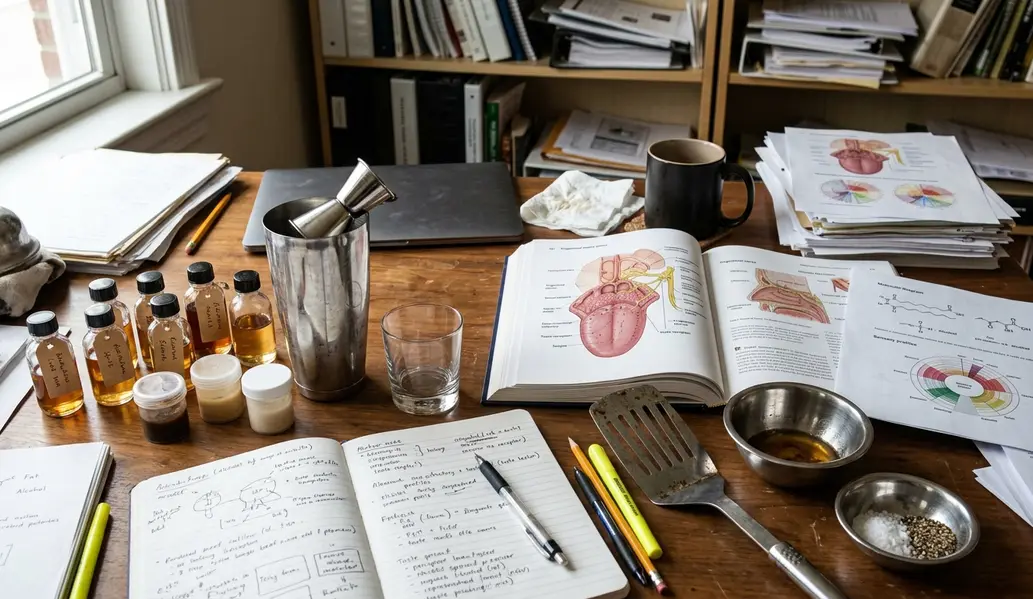
Framing lower-proof short shakes as a deliberate pairing strategy solves this sensory crowding. While high-proof shakes shine as standalone late-night desserts, scaling back both the alcohol and the glass size makes the drink a natural companion for a hot main course. Swapping a towering 16-fluid-ounce diner glass for a 4–6 US fluid ounce serving (approximately 118–177 mL) keeps the portion dainty, cold, and refreshing from the first bite of the patty to the last crisp fry.
The Burger-Shake Load Breakdown
Cheddar, bacon, aioli, and brioche meet dairy sweetness and ethanol warmth in a single bite. Separate those sensations by dialing down the alcohol burn and shrinking the serving glass to 4–6 fluid ounces so the shake complements the beef instead of crowding it.
Selecting Fortified Wines, Amari, and Liqueurs for the Blender
Choosing the right bottle for burger recipes starts with identifying the flavor missing from the plate: herbal bitterness for contrast, fortified-wine fruit to bridge sharp cheese and sweet onions, or roasted coffee and nut notes to echo a deeply seared crust. Lower-strength herbal amari, sweet fortified wines, and coffee or nut liqueurs function as distinct flavor families rather than interchangeable alcohol categories.
Always verify the actual bottle strength and sweetness before setting the dose, as some traditional amari and roasted nut liqueurs approach full spirit strength. Sweet vermouth commonly sits around 15–18% ABV, while tawny port commonly sits around 19–22% ABV, though the purchased bottle's label should always guide recipe calculations.
- Herbal Amari and Botanical Vermouths: Sweet vermouth contributes bright botanical character, while lower-strength dark amari bring gentian, citrus peel, and warm spice.
- Fortified Wines: Tawny port contributes aged fruit and nut notes, whereas Pedro Ximénez sherry contributes concentrated dried-fruit sweetness. (Note that while ports and sherries rely on oxidative aging, not every sweet vermouth is an oxidatively aged wine.)
- Coffee and Nut Liqueurs: Roasted espresso and toasted hazelnut modifiers mirror the browned crust of griddled beef.
Bitterness and subtle wine acidity provide welcome perceptual contrast to rich beef fat and melted cheese. While these modifiers do not literally wash fat away from the tongue, and very sweet fortified wines like Pedro Ximénez should never be treated as automatic palate cleansers, their botanical and acidic edges keep the dairy emulsion from tasting flat.
There is also a practical trade-off in the blender. At an equal ethanol dose, 30 mL of a 20% ABV modifier contains the exact same 6 mL of ethanol as 15 mL of a 40% ABV spirit. Pouring that larger 30 mL modifier dose gives the shake twice the aromatic flavor volume, though it also introduces more water and potentially more sugar, both of which affect the finished texture.
Three Burger and Low-ABV Shake Pairings That Actually Work
These three formulations serve as proposed kitchen starting points designed to yield two small shakes per batch. Because ice-cream density and blender aeration change the final volume, measure the first batch's yield in a liquid measuring cup before assigning a finished ABV or promising exactly two full glasses.
1. Smashed American Cheese Burger with a Vanilla-Sweet Vermouth Shake
A crisp-edged smashed patty topped with melted American cheese, dill pickles, and tangy special sauce thrives alongside herbal aromatics. Blend 240 g vanilla ice cream, 30 mL cold milk, and 30 mL sweet vermouth until smooth, then finish each glass with a drained maraschino cherry. The vermouth's botanicals echo the tang of the pickles and sauce without overpowering the mild cheese.
The Maraschino Boundary
Top the vanilla-vermouth shake with a drained maraschino cherry rather than a splash of maraschino liqueur. The cherry garnish preserves the lower-strength formulation, whereas maraschino liqueur is often substantially stronger than vermouth and changes the alcohol calculation.
2. Thick Tavern Patty & Gruyère with a Coffee-Amaro Malt Shake
A thick tavern patty crowned with sweet caramelized onions and nutty Gruyère calls for roasty depth. Measure 240 g vanilla ice cream, 30 mL cold milk, 30 mL of a label-checked lower-strength dark herbal amaro, 6 g malted milk powder, and 1 g instant espresso powder. Dissolve the malt and espresso powders completely in the cold milk before adding the ice cream and amaro to the blender. The roasted coffee and bitter herbs balance the sweet alliums and rich cheese.
3. Blue Cheese & Bacon Burger with a Fig, Tawny Port & Black Pepper Shake
Funky blue cheese and smoky bacon demand bold dried-fruit notes. Combine 240 g vanilla ice cream, 30 mL cold milk, 30 mL tawny port, and 10 g smooth fig preserve, then add one small pinch of finely ground black pepper to the batch. The jammy fig and nutty port bridge the gap between pungent blue cheese veins and salty pork fat.
Pre-Batch Your Chill Base Two Hours Before Guests Arrive
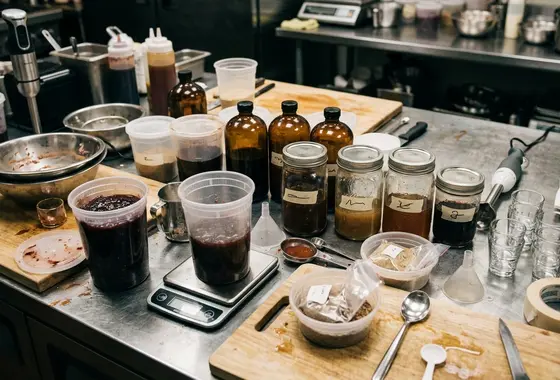
No host wants to be trapped behind a roaring blender while burgers are resting on the griddle and cheese is melting. Moving the measuring, powder dissolution, and ice-cream scooping ahead of service eliminates last-minute clutter without storing a fully blended shake long enough for its foam and texture to separate.
- 120 Minutes Before Arrival (Whisk the Liquid Base): Whisk your cold milk, low-ABV modifier, and any dry powders together in a small pitcher. For four servings of the coffee-amaro malt formulation, whisk together 60 mL milk, 60 mL modifier, 12 g malted milk powder, and 2 g instant espresso powder until completely dissolved.
- Chill Below 40°F/4°C: Cover the pitcher and refrigerate the liquid base at 40°F (4°C) or colder, matching USDA home food-safety guidance for upper refrigerator-temperature targets.
- Pre-Scoop into Metal: Portion 480 g vanilla ice cream (for four servings) into a covered, freezer-safe metal container and return it to the freezer. Place your small serving glasses in the freezer or refrigerator to chill separately.
- Blend During the Final Burger Rest: Position the blender and chilled glasses away from the griddle so pouring does not interrupt burger assembly. As the patties enter their final cooking and resting stage, give the refrigerated liquid base a quick re-whisk, pour it over the portioned ice cream, and blend in 10–20-second bursts, stopping the moment the mixture turns smooth.
For your next burger night, pull out a kitchen scale and liquid measuring cup two hours before dinner, whisk 60 mL of cold milk with 60 mL of your chosen low-proof modifier, portion 480 g of vanilla ice cream into a cold metal tin, and pour the finished blend into chilled 4–6 US fluid ounce coupe glasses or small tumblers the moment your patties come off the iron.


Leave a Comment