

Why an Overloaded Burger Menu Leaves Dinner Lukewarm
Ten novelty toppings and a collection of fussy sides can undo a burger night before the first patty leaves the skillet. Mushrooms need stirring, onions need watching, and the macaroni sauce needs another whisk. Meanwhile, the beef steams in a crowded pan and toasted buns soften beneath wet toppings. Guests get lukewarm plates; the cook gets a sink full of pans.
A tighter menu gives the beef room to develop its savory crust and gives everyone a chance to sit down. That easy rhythm belongs to the appeal of the Brooklyn neighborhood bistro: substantial food, familiar flavors, and enough breathing room for another conversation.
Colin Devlin opened the original DuMont at 432 Union Avenue in Williamsburg in 2001. DuMont Burger followed at 314 Bedford Avenue in 2005. Both belong in the story of the early-2000s New York neighborhood-bistro burger scene, where a generous burger could anchor an evening of nyc dining.
The useful home lessons concern eight decisions: toppings, bun proportions, cheese, crust, substantial sides, acidity, an alternate main, and serving order. These are practical readings of the DuMont legacy, rather than a reconstruction of Devlin’s menu-development process. The goal is a dinner that feels abundant without demanding constant rescue at the stove.
Lessons 1 & 2: Give the Beef Space and the Bun a Job
Let Each Topping Earn Its Place
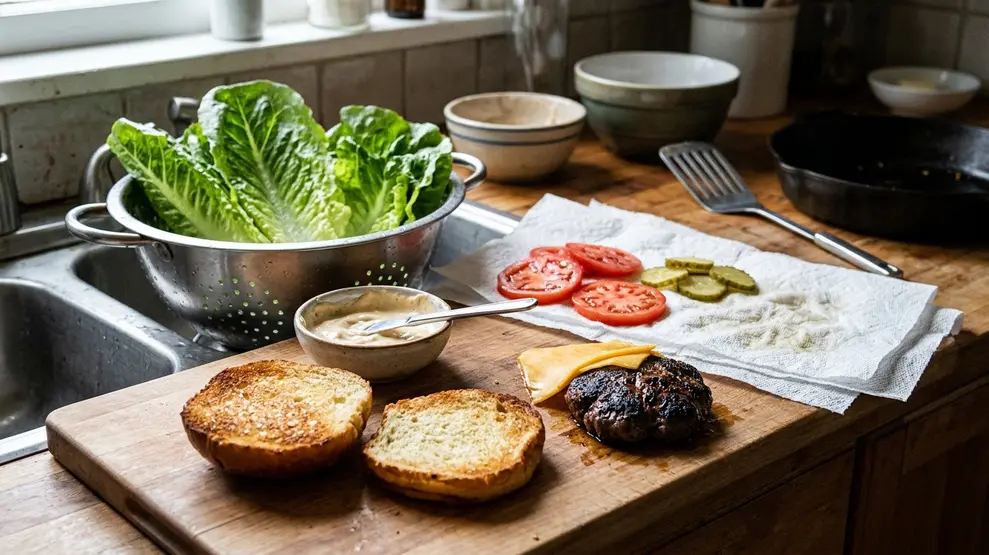
Lettuce brings crunch. Tomato brings juice. Onion brings bite, and pickles supply the sharpness that makes another mouthful of rich beef appealing. That familiar combination offers a useful test for burger recipes: what does each extra layer contribute?
For a home adaptation, choose romaine or Bibb lettuce according to the texture wanted, then wash and dry it thoroughly. Drain sliced tomatoes and pickles before assembly. A towering pile of wet vegetables can overwhelm even a well-toasted bun, and its height makes the burger harder to eat.
Finish these jobs before heating the burger skillet. The payoff arrives during cooking, when the only urgent task should be tending the patties.
Match the Bun to the Cooked Patty
A brioche bun should yield under a bite while keeping the burger together. Choose one close to the cooked patty’s diameter; an oversized bun leaves a fringe of bread, while a narrow one lets the filling escape. Sesame-topped brioche is a home option here, rather than a claim about every version of DuMont’s menu.
Lightly butter the cut faces and toast over medium heat for approximately 30–90 seconds, checking for golden browning. Hold them cut-side up so steam can escape. Toasting slows soaking; it cannot make bread waterproof.
Leave Bare Iron
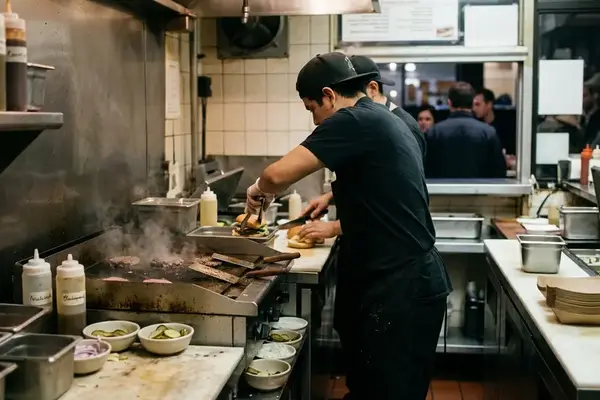
Two patties in a 12-inch skillet make a useful starting arrangement. Leave visible cooking surface between them. Actual capacity depends on patty size, burner output, and heat recovery: pooled juices signal that the pan needs more room.
Lessons 3 & 4: Choose Assertive Cheese and Build a Dry-Surface Crust
Choose Cheese for Flavor and Melt
Sharp cheddar, Gruyère, and blue cheese offer different routes through a rich burger. Cheddar brings a familiar tang; Gruyère contributes a rounded, nutty flavor; blue cheese gives a more forceful bite. Treat these as home choices, rather than interchangeable ingredients or a definitive historical DuMont cheese list.
Thin cheddar or Gruyère slices are easier to coordinate with the final stage of cooking than a thick slab. Blue cheese works as a measured crumble, where its stronger flavor can spread without dominating every mouthful. Pick one cheese and let the toppings support it.
Dry, Salt, Sear, Then Measure
For a thick home burger, a practical starting point is 6–8 ounces of beef formed approximately 3/4–1 inch thick. Dry the exterior and apply coarse kosher salt immediately before searing. Sustained heat and a relatively dry surface favor the Maillard browning that produces a dark, savory crust. Surface water has to evaporate before that browning can gather pace.
Commercial cooking equipment recovers heat differently from a residential skillet. Give each batch space rather than trying to reproduce restaurant output. Add thin cheese slices near the end; if they need help melting, cover briefly for a 20–40-second interval, then check the meat’s temperature again.
Measure the Center
The USDA food safety guidelines for ground beef specify 160°F, or 71.1°C, measured with a food thermometer. Insert the probe sideways into the center of a thick patty. Freshly ground chuck still carries the risks associated with grinding, which can distribute surface contamination throughout the meat. A remembered pink-centered bistro burger and a guessed carry-over rise do not establish that endpoint.
Lessons 5 & 6: Give DuMac Its Moment, Then Bring the Vinegar
Make the Pasta the Substantial Side
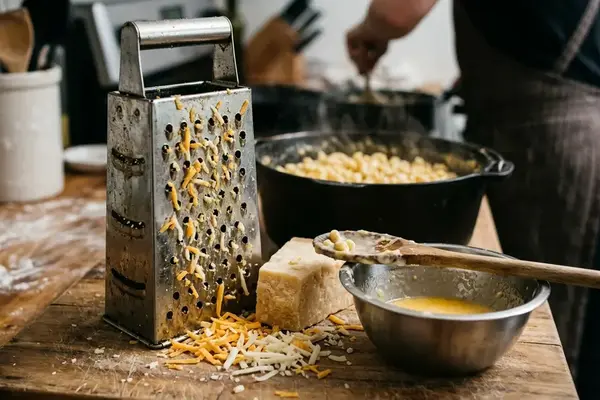
DuMont’s signature DuMac and Cheese has the kind of generous character that makes a side worth ordering in its own right. Descriptions associate the dish with radiatore pasta, cheddar, Gruyère, Parmesan, and bacon. Those ridged curls and that cheese-and-bacon combination provide a direction for home cooking; exact sauce ratios require a published recipe before anyone can call a reconstruction the restaurant’s formula.
The main operational trap is easy to picture: the pasta still needs stovetop attention just as the thick patties begin searing. Suddenly, both dishes need the same hands.
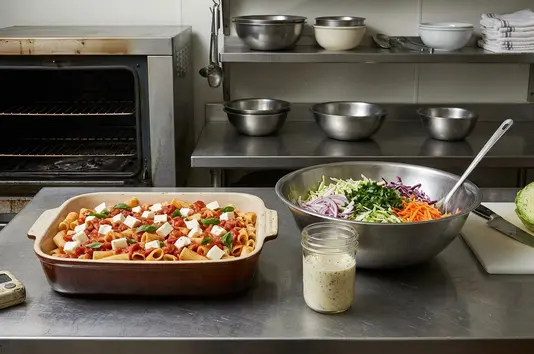
Assemble the baked pasta ahead and schedule the oven work so it is ready before the first burger enters the skillet. If preparing it in advance, refrigerate promptly and reheat to 165°F in the center. That temperature check is more useful than borrowing an unverified restaurant baking time.
Give Richness a Sharp Counterpoint
For sides & appetizers, baked macaroni and cheese plus cabbage dressed with vinegar and salt makes a manageable pairing. Refrigerate the dressed cabbage for 20–30 minutes, then toss again before serving. Its cold crunch and acidity offer a clear contrast to beef fat and melted cheese.
Dill pickles do similar work. Shoestring fries bring crispness and salt, but they add another hot-food task and supply no acidic reset. With pasta already on the menu, the vinegar-dressed side earns its place quickly.
Lessons 7 & 8: Plan the Alternate and Serve Each Burger Hot
Build the B.L.T. Around the Guest List
A thick-cut bacon B.L.T. fits the same neighborhood-bistro appetite as a burger: toasted bread, ripe tomato, crisp lettuce, and something deeply savory. It also shares ingredients with the burger station, which keeps shopping and preparation contained.
Ask about dietary needs before choosing it. A bacon sandwich offers an alternative to beef, not a vegetarian meal. If it suits the guests, cook the bacon before burger searing and drain it on a rack. Have the lettuce washed and dried and the tomatoes sliced before the skillet gets busy.
Let Conversation Linger, Not Cooked Patties
Put sides and condiments on the table first. Bring each manageable round of burgers directly to diners, with buns and toppings already accessible. Family-style bowls suit a small apartment table; holding every burger for one grand platter sacrifices the warmth the whole evening was built around.
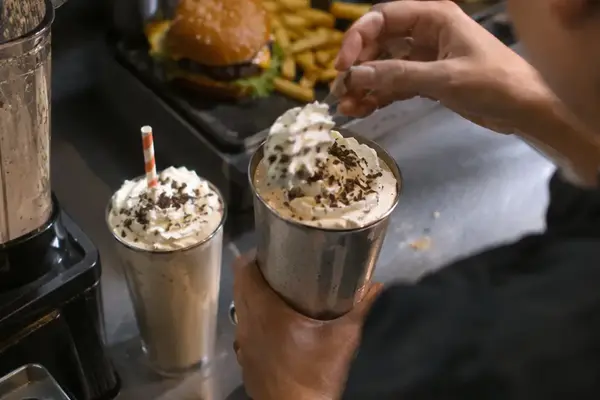
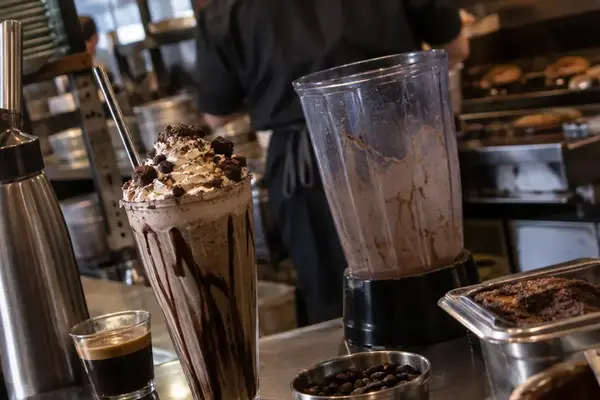
Cold drafts, simple cocktails, or boozy shakes can accompany the meal without setting its pace. The pleasure lies in an unhurried table and food arriving when it is ready. That generous neighborhood spirit has a precise address in the DuMont story: DuMont Burger opened at 314 Bedford Avenue in 2005.




Leave a Comment