

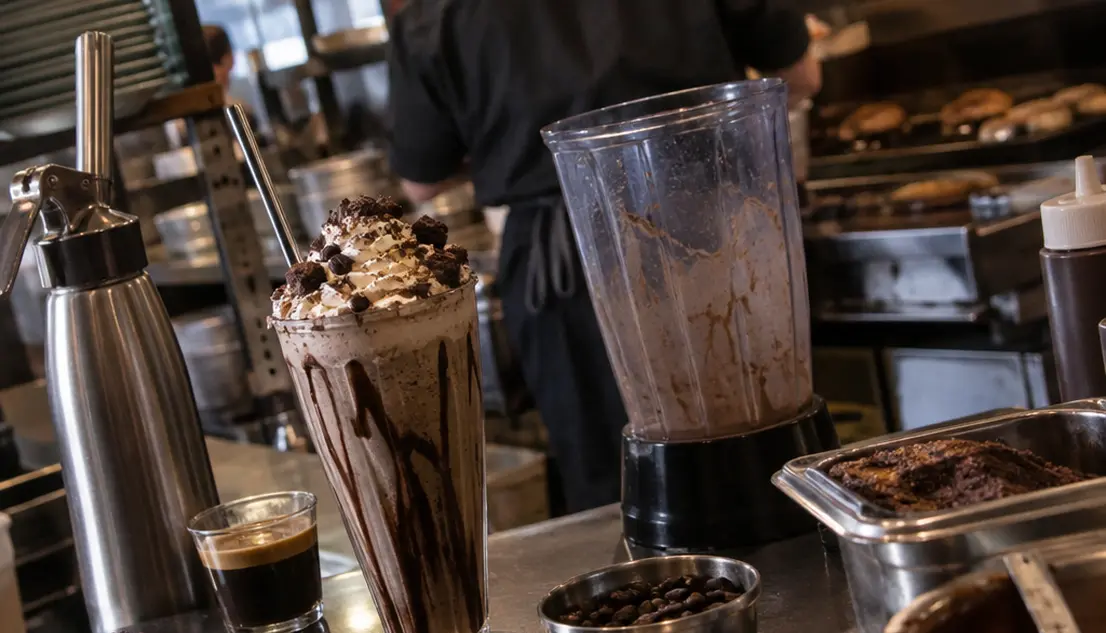
A double smash burger with caramelized onions calls for something cold enough to meet its heat and rich enough to stand beside it. An espresso stout brownie shake does both. Roasted beer and coffee pick up the browned flavors from the skillet, while vanilla ice cream cools the palate between bites. The trick is keeping the shake thick enough to sip and the brownie pieces chewy enough to find.
Brooklyn Burger Nights Meet the Affogato
The idea brings together two familiar pleasures. In a classic affogato, hot espresso runs over ice cream and turns the edges into a sweet, coffee-soaked pool. American coffee milkshakes took that pairing in a colder, more leisurely direction. The early-to-mid-2000s Williamsburg burger scene offered another piece: craft beer alongside elevated comfort food, served with an appetite for playful combinations.
There is no need to pin the adult milkshake on a single Brooklyn counter. Picture the meal instead. A burger arrives with a deeply browned crust, and a sip of stout follows with its own roasted-malt edge. Put that stout into a vanilla shake with espresso and the connection becomes immediate. The ice cream softens the bitter notes before the next bite of burger.
Brownie belongs in this version for the same reason a good side belongs beside a burger: it adds something to look forward to between bites. Folded-in pieces offer a dense, fudgy contrast to the smooth base. It feels like a diner dessert that stayed up late with the craft-beer crowd.
Choose a Stout That Leaves Room for Coffee
For two small shakes, start with 350–400 g high-fat vanilla ice cream, 45–60 mL chilled stout, one 25–35 mL espresso shot, and 40–60 g fudgy brownie. Those amounts give the ice cream the lead. The stout and espresso bring roast and bitterness; they should be easy to taste without turning the mixture into a drink that runs straight through the straw.
A dry Irish stout is the straightforward choice for burger night. Its roasted bitterness works with a rich patty and caramelized onions. An imperial pastry stout takes the shake toward dessert: added sweetness and often greater alcohol strength can make the same base taste sweeter and pour thinner. Choose it because that is the flavor you want, then keep the initial beer pour modest.
Pull a fresh dark-roast espresso shot for a coffee note that can cut through the ice cream’s butterfat. Let it cool before blending. The affogato’s hot-on-cold pleasure makes sense in a dish eaten with a spoon; a thick blender shake needs the ice cream to hold its structure.
Cut a dense brownie into roughly 1–2 cm pieces. Fudgy squares keep a chewy center in the finished glass. Cakey brownie breaks into airy crumbs that disperse through the base, leaving the shake grainy rather than pleasantly chunky.
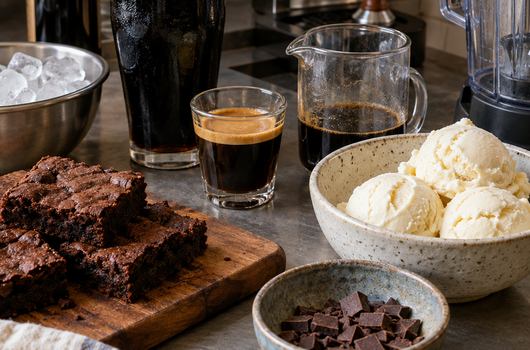
Alt text: Chilled stout, cooled espresso, vanilla ice cream, and fudgy brownie pieces arranged for an espresso stout shake
Give the Glasses Their Hour in the Freezer
A frosted glass buys the shake a better entrance. Put serving glasses in the freezer 60–90 minutes before serving, so the first pour meets cold glass rather than a warm wall. Chill the stout in the refrigerator for at least two hours. Keep the ice cream frozen until the pitcher is ready.
Pull the espresso into a shallow cup early enough to reach room temperature, allowing 15–25 minutes and checking it before it goes into the blender. A shallow cup helps the shot cool while the rest of dinner comes together. If it still feels warm, give it more time; melting ice cream to hurry a milkshake defeats the point of the chilled glass.
A powerful blender with a tamper makes this recipe easier. Thick ice cream may sit above the blades at first. Use the tamper to move it down instead of adding a generous splash of beer. Alcohol depresses the mixture’s freezing point, so extra stout changes both strength and texture.
Keep It Frosted
Fifteen minutes in the freezer cannot replace the full glass chill. Set the glasses in place before the burger cooking clock starts.
Blend the Base, Then Save the Brownie
The order in the pitcher matters. Ice cream goes in first to make a heavy base; cooled espresso and cold stout follow. Start at medium speed, use the tamper if needed, and stop as soon as the liquids disappear into the ice cream. That usually takes roughly 20–30 seconds, sometimes less.
- Load the pitcher: Add the measured vanilla ice cream, then pour in the room-temperature espresso and chilled stout.
- Blend briefly: Run the blender at medium speed until the color is even and the mixture looks thick. Stop sooner if it is already uniform.
- Protect the pieces: Turn off the motor. Add the brownie chunks and fold them through with a long spoon before pouring.
The shake’s texture gets decided twice: first when the stout and espresso pours stay restrained, then when the brownie avoids the blades. High-speed blending would reduce those fudgy pieces to flecks and take away the chewy bite that makes the last sips worth slowing down for.
If the base looks watery, add 50–75 g more ice cream and pulse briefly. Ice cubes seem like a quick rescue, but they dilute the shake as they melt. If the mixture holds so firmly that it will not pour, fold in 15–30 mL whole milk. More beer would loosen it while raising the alcohol and diluting the ice cream base.
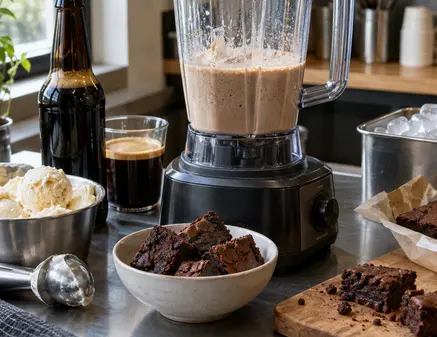
Alt text: Brownie chunks being folded by hand into a thick espresso stout milkshake after blending
Leave the brownie where the spoon can find it: in pieces, folded through at the end.
Adjust the Roast Before Adding Sweetness
Decide which beer belongs in the glass before reaching for chocolate syrup. A dry stout and a pastry stout ask different things of the same ice-cream base. For a stronger version, replace the standard stout with a barrel-aged stout while keeping the initial pour at 45–60 mL. Have another 50–75 g ice cream ready; the extra alcohol may leave the shake looser.
For a lower-alcohol take, use 45–60 mL of a robust non-alcoholic porter-style beer and 50–60 mL cooled espresso. The double shot keeps the roasted flavor prominent without relying on stout’s alcohol strength. That larger coffee pour may thin the base, so add ice cream if it needs more body. A beer labeled non-alcoholic may still contain a small amount of alcohol; check the label when a drink must contain none.
Taste the blended base before sweetening it. When coffee and stout combine into an astringent edge, blend in 5–10 mL chocolate syrup, then taste again. A small drizzle should round off the bitterness while leaving the roast audible beneath the vanilla and brownie.
Sweeten After Tasting
Pastry stout and brownie already bring sweetness. Let the first sip tell you whether the base needs chocolate syrup.
Serve the Shake as the Smash Burgers Land
The most useful burger-night trick happens well before the skillet heats. Caramelize the onions ahead of time; they commonly need 25–40 minutes. Put the glasses in the freezer 75–60 minutes before the cooking clock starts, and make sure the stout has had at least two hours in the refrigerator. Then the short final sequence can belong entirely to the burgers and shakes.
Here is a service plan for a classic double smash burger with caramelized onions and two small shakes:
- Minute 0: Leave the prechilled glasses in the freezer. Pull the espresso into a shallow cup so it can cool while the cast-iron skillet heats. Keep the brownie cut and the ice cream frozen.
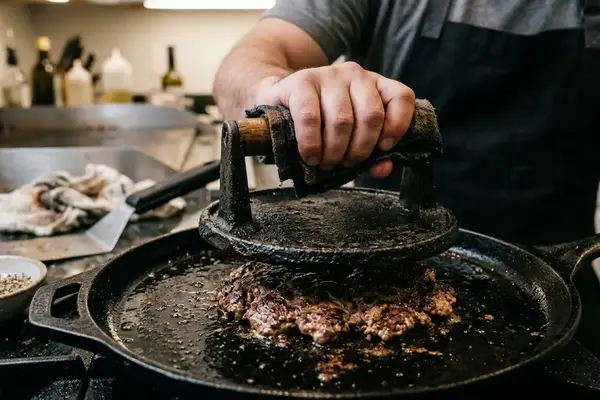
- Minute 10: Smash the patties on the hot skillet. Cook roughly 2–3 minutes on the first side and 1–2 minutes after flipping. Bring out the prepared onions and assemble the double burgers around minutes 14–15.
- Minute 15: Check that the espresso has reached room temperature. As the assembled burger rests for a minute, blend the ice cream, espresso, and stout for no more than 30 seconds. Stop the blades and fold in the brownie.
- Minute 16: Take the frosted glasses from the freezer, pour the shakes, and serve them beside the burgers.
Set a glass next to each plate and take the first sip after a bite of burger. The stout meets the patty’s browned crust, the espresso clears the richness, and a piece of brownie waits near the bottom of the glass.


Leave a Comment