

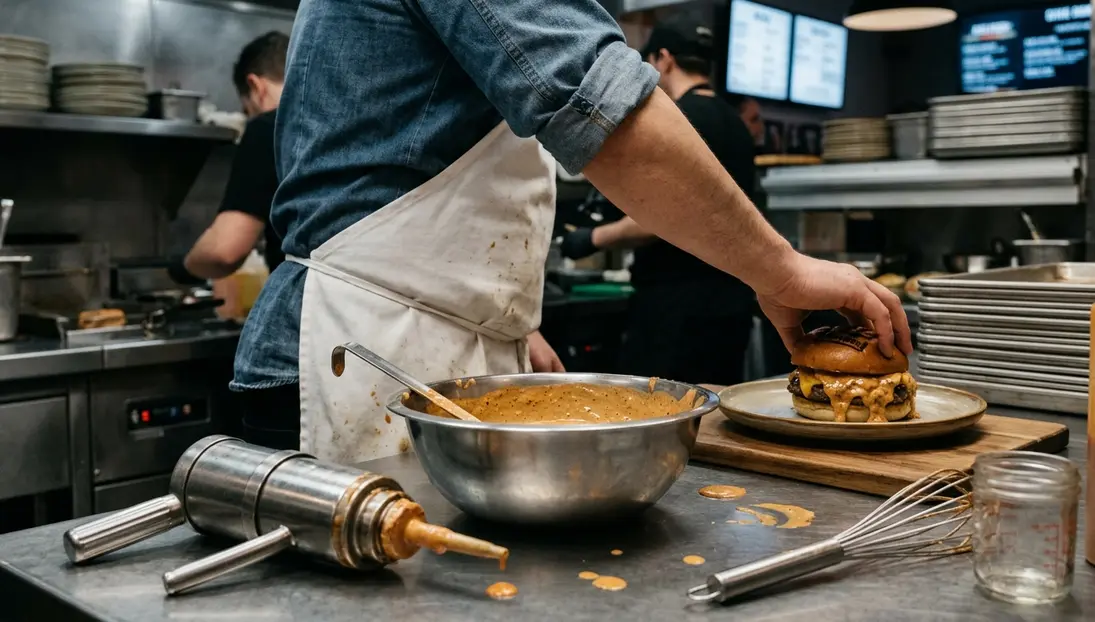
What Makes Burger Sauce an Emulsion
A signature burger sauce is a stabilized emulsion of fat and acid specifically engineered to cut through the rich, savory profile of rendered beef fat.
That definition matters. A spoonful of ketchup and mayonnaise may taste pleasant, yet a proper house sauce has a job to do. Its fat carries pepper, mustard, chile, and other seasonings across the palate. Acid interrupts the richness of the patty. The body creates a thin moisture barrier between hot meat juices and the toasted bun.
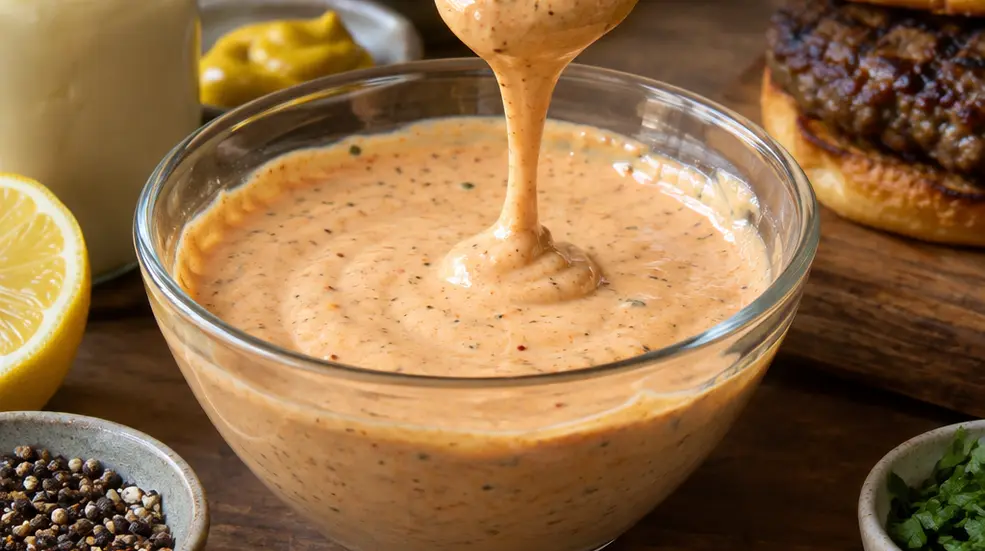
The finished consistency should hold a spoon track for 2 to 3 seconds, then spread into a continuous layer without tearing the bread. A sauce that immediately levels out will run toward the plate. One that sits in a stiff mound produces uneven bites and pushes the burger apart.
The Diner-Sauce Standard
Classic New York diner culture understood the value of a recognizable sauce long before “signature” became menu language. The house blend gave a burger its identity: creamy at first, bright through the middle, and salty enough to pull the beef, pickles, and toasted bun into the same bite. Its recipe often stayed behind the counter, guarded with the same affection as a favorite griddle.
Timing also shapes the result. Spread the sauce 1 to 3 minutes before assembly and serve the finished burger within 5 to 10 minutes. The coating slows sogginess; it cannot turn a bun waterproof.
The practical test: The sauce should cling to both bun faces, release cleanly with each bite, and leave the plate free of a spreading puddle.
Choosing Mayonnaise, Sour Cream, or Yogurt
The fat base determines how the sauce feels before any pickle, tomato, or spice enters the bowl. Mayonnaise should account for roughly three-fifths to two-thirds of the finished volume. Its dispersed oil gives the sauce body and helps carry fat-soluble aromas from pepper, mustard, and chile.
For a 300-milliliter batch, begin with 180 to 200 milliliters of mayonnaise. Heavy-duty commercial mayonnaise produces the thick, glossy finish associated with diner-style burger recipes. It also tolerates the heat radiating from a fresh patty better than looser dairy bases.
When Dairy Bases Make Sense
Sour cream contributes an immediate tang, while Greek yogurt gives the sauce a fresher, leaner character. Both can suit a burger served promptly at the table. Their weakness appears during a long cookout or when sauce sits against very hot beef: the mixture can loosen or separate, leaving liquid around the bun.
Homemade aioli brings a vivid garlic-and-oil flavor. Pasteurized commercial mayonnaise remains the steadier choice for outdoor service and extended preparation. That recommendation concerns holding stability rather than flavor alone.
Keep It Cold
Rest the mixed sauce at 4°C/40°F or colder. During service, discard it after 2 hours at room temperature, or after 1 hour when the surrounding temperature exceeds 32°C/90°F.
These handling times apply to this mayonnaise-based approach; sour cream and yogurt substitutions change the sauce’s behavior.
Using Pickle Brine, Vinegar, and Lemon
A rich ground-chuck or brisket-forward patty needs a clean acidic finish. Without that lift, mayonnaise and rendered beef fat linger together, and the second bite feels heavier than the first.
Dill-pickle brine is the most efficient diner-style option because it brings acid, salt, and seasoning in one pour. Apple cider vinegar offers a direct fermented tang. Fresh lemon juice tastes brighter and lighter, though it moves the sauce away from the familiar NYC dining profile.
Add Liquid in Small Stages
Begin with 5 milliliters, or 1 teaspoon, of brine, vinegar, or lemon juice for every 120 milliliters of mayonnaise. Whisk for 15 to 20 seconds before deciding whether the sauce needs another teaspoon. Gradual additions allow the liquid to disperse through the fat base instead of pooling at its edges.
The burger should guide the choice. A fatty, simply seasoned patty can carry sharper acidity. A burger already stacked with pickles needs a quieter sauce so the sour notes do not crowd out the beef.
After the final acid addition, refrigerate the bowl for 20 to 30 minutes and check the texture again. Salt and acidic liquid can pull extra moisture from chopped pickles, so a sauce that looked perfect at the whisk may become looser after its short rest.
Brine Before Vinegar: Start with dill-pickle brine when relish or pickles already appear on the burger. It connects the sauce to the toppings while supplying the acidity the emulsion needs.
Setting Sweetness and Heat Without Scorching
Sweetness establishes the sauce’s depth; heat supplies its finish. Set them in that order. A strong chile addition can hide whether the tomato base has made the sauce rounded or simply sugary.
Ketchup performs several jobs at once, contributing tomato, sugar, vinegar, body, and the rosy color expected from a classic house sauce. Brown sugar offers concentrated sweetness without extra tomato. Caramelized onion paste moves in a savory direction and gives steakhouse-style boozy-shake-and-burger menus a deeper companion flavor.
For heat, cayenne lands quickly and directly. Vinegar-based hot sauce adds chile and another dose of acid. Grated horseradish gives a shorter aromatic burn that works especially well with beef-forward burgers.
Season, Stir, Then Wait
For each 300-milliliter batch, test cayenne in 0.25-gram increments or hot sauce in 2.5-milliliter increments. Stir for 20 to 30 seconds after every addition. Horseradish and cayenne need 10 to 15 minutes to disperse through the fat, and an immediate taste can underestimate the final heat.
Sauce Stays Upstairs
Keep ketchup-heavy, brown-sugar, and caramelized-onion sauces away from the cooking surface. Contact with the griddle during the final 30 to 60 seconds can concentrate and scorch their sugars. Dress the toasted bun only.
This boundary preserves the clean sweetness of the sauce and the hard-earned crust on the patty.
Adding Onion, Cornichons, and Toasted Spice
A smooth sauce can taste balanced and still feel sleepy. Texture wakes it up.
Build that texture only after the base tastes properly sweet, acidic, and salty. Solid ingredients can disguise an imbalance during tasting, especially when pickle pieces release brine at different moments. Once the emulsion is settled, finely minced white onion adds crispness, rough-chopped cornichons deliver bright acidic bursts, and cracked black pepper or toasted mustard seed contributes a dry crunch.
Cut Ingredients for a Clean Bite
- White onion: Cut it to roughly 1 to 2 millimeters so it distributes throughout the sauce without dominating a bite.
- Cornichons: Chop them to about 3 to 5 millimeters for visible texture and small pockets of acidity.
- Cracked pepper or mustard seed: Fold it in after the wet ingredients are balanced to preserve its distinct texture.
Larger onion or pickle pieces tend to catch against the bun and drag out of the sauce when someone bites through the burger. The aim is contrast, not structural trouble.
Powdered aromatics follow a different rule. Garlic powder and onion powder need at least 2 hours under refrigeration to absorb moisture and release their flavor evenly into the fat base. Give the finished sauce a 2-to-4-hour rest before service. For advance preparation, hold it covered for 12 to 24 hours, then stir before use.
That rest is where a freshly mixed sauce loses its raw, separate edges and begins to taste like a house recipe.
The 3:1:1 House Sauce Worth Memorizing
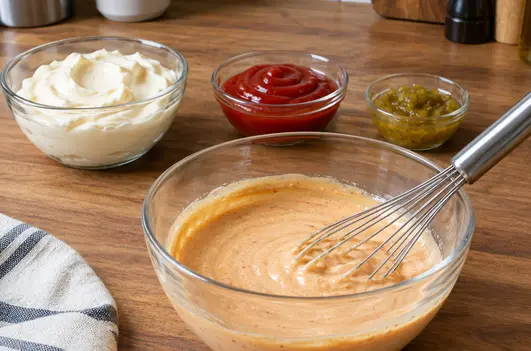
The clearest route to a balanced signature sauce is the 3:1:1 formula: three parts mayonnaise, one part ketchup or another sweet tomato base, and one part acidic relish-and-brine mixture. It captures the bun-beef-brine balance that defines the dumont legacy of a deeply satisfying burger.
Mix One 300-Milliliter Batch
- Whisk 180 milliliters of mayonnaise with 60 milliliters of ketchup until the color is uniform and no pale streaks remain.
- Add 15 milliliters of dill-pickle brine in two or three stages, whisking between each addition.
- Fold in 45 milliliters of drained dill relish without crushing the pieces.
- Cover and refrigerate the sauce for 2 to 4 hours.
- Stir, taste, and only then consider pepper, cayenne, mustard, garlic, or onion powder.
The batch makes approximately 300 milliliters and dresses roughly 10 burgers. Use about 25 to 30 milliliters for each burger, divided between the top and bottom buns.
Starting with the fixed ratio removes the guesswork. Mayonnaise supplies a stable body, ketchup brings measured sweetness and tomato depth, and the relish-brine portion delivers both acidity and physical texture. Custom seasoning belongs after those three elements have rested together.
Hold the Ratio: Make the baseline exactly once before changing it. That first batch gives every later adjustment a useful reference point.
Toast both bun faces, spread the rested sauce generously across each one, and assemble while the patty is hot. Commit to the double-sided coating: it gives every bite the full house-sauce flavor and creates the strongest moisture seal this burger needs.




Leave a Comment